Inside the Daily Morning Group Ascent of Ilamatepec
What the daily group ascent of Santa Ana Volcano feels like from the trailhead gathering to the rim, the local guides, reported escort, group size and pace.
 By Carlos Hernández, Santa Ana Volcano tour guide & hiking specialist
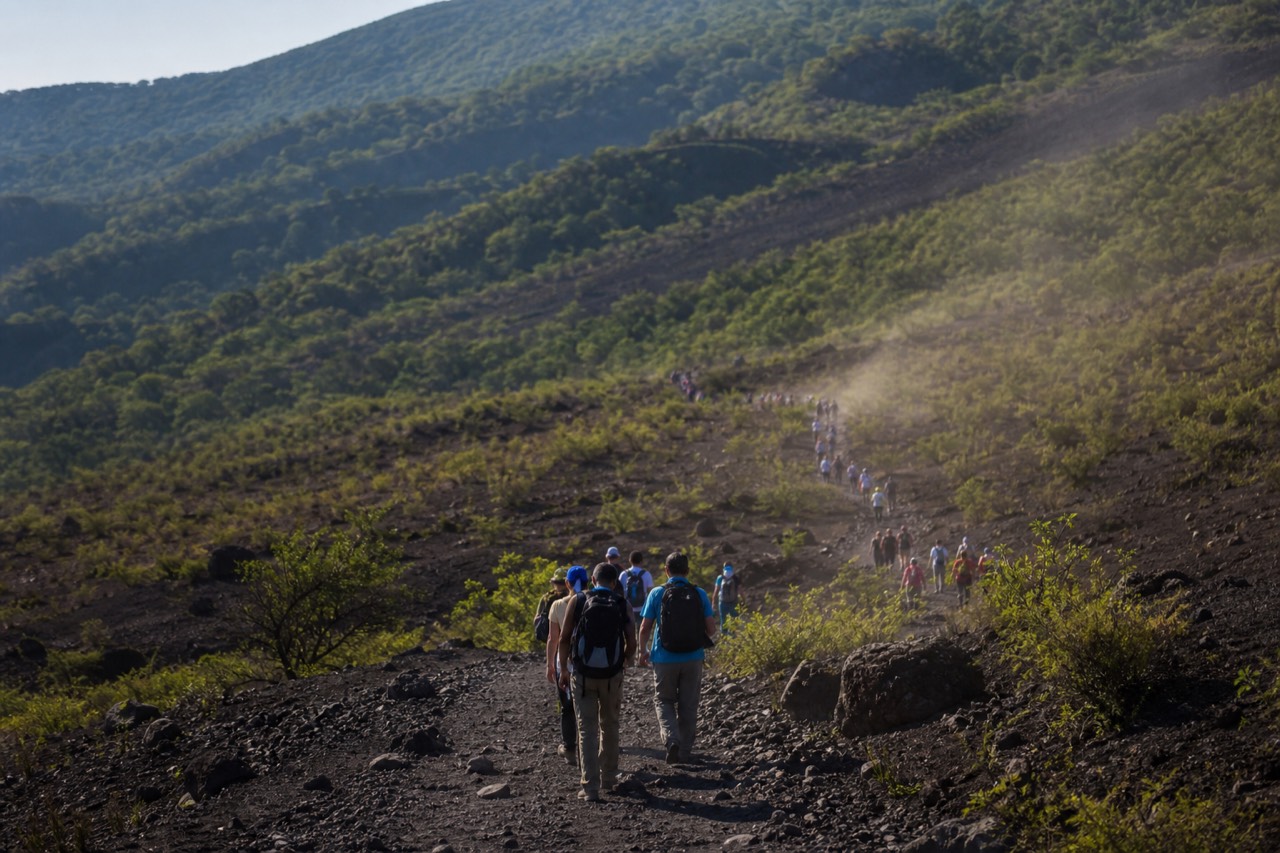
By nine in the morning the trailhead smells of sunscreen and instant coffee. Pickup trucks crunch into the parking area, a dog patrols for dropped breakfast, and a loose crowd forms near the guides: surfers up from El Tunco, a Salvadoran family with a cooler, two Germans checking their watches. Then somebody counts heads, the chatter drops, and the whole assembly starts uphill together. I have been part of this ritual since 2018, over a thousand travellers guided by my own count, and it still feels less like a hike departure and more like a small village deciding to go look at its volcano.
This post is about that ritual: how the daily group ascent actually works, who runs it, and how to slot yourself into it without stress.
What happens at the trailhead before anyone starts walking?
Three things: you pay, you gather, you wait for the start. Trailhead access opens around 7:00, you settle the cash fees ($3 entrance for foreigners, $3 parking, about $4 for the group guide), and the single daily group forms and begins climbing somewhere between 9:30 and 10:00, with 11:00 as the absolute last start.
The waiting is the underrated part. Early arrivals get a slow hour of watching the mountain wake up: cloud peeling off the summit, vendors setting out poles for rent at about $2, guides comparing notes on yesterday's weather. Everything is cash, US dollars, small bills, and there is no counter that takes a card anywhere on this mountain. Count the fee stack the night before and the whole gate ritual takes two minutes.
| Step | What happens | Rough timing |
|---|---|---|
| 1. Arrive | Park ($3), access opens | From ~7:00 |
| 2. Pay | $3 entrance (foreigners), ~$4 group guide, optional $2 poles | On arrival |
| 3. Gather | The day's single group forms near the guides | ~9:00 to 9:30 |
| 4. Start | Everyone moves out together | ~9:30 to 10:00, last start 11:00 |
| 5. Climb | 6.9 km round trip, ~470 m gain | ~2 h up |
| 6. Crater time | Rim views, photos, paletas | Until the area closes ~13:00 |
| 7. Descend | Back down the same trail | ~1.5 h |
Who actually leads the group up the mountain?
Local guides, and they are mandatory for everyone, no exceptions for experience or fitness. The daily ascent is an organized affair: community guides set the pace and manage the group, and hikers regularly report a tourist-police escort accompanying the climb. Nobody walks this trail solo, which is precisely why it feels so relaxed.
The guides are the institution here. Names like Josue, Gaby and Diego keep showing up in recent reviews with genuine warmth, and having worked alongside these crews for years I can tell you the praise is earned. They know which stretch rolls ankles, where the view of Izalco opens up, and exactly how long a group can linger at the rim before the 13:00 closure. The reported police escort adds a layer that surprises first-timers, then almost immediately becomes background; this is a country holding a Level 1 rating from the US State Department, exercise normal precautions, and the escort reads as belt-and-braces rather than warning sign. The wider mandatory-guide question gets its own treatment in can you hike it without a guide, and the short answer has not changed: no.
How big is the group and how fast does it move?
The group is simply everyone who showed up that morning, so its size swings with the day of the week and the season. The pace is deliberately steady: about two hours up and an hour and a half down over 6.9 km, moderate on AllTrails, with regular pauses so the whole spread of ages and fitness levels stays together.
Weekends and dry-season mornings gather bigger crowds; a rainy Tuesday in the green season can feel almost private. The guides run it the same way regardless. Steady walking, breathers at the viewpoints, and a natural stringing-out on the rocky upper third where everyone picks their own line through the loose stuff. Recent hikers keep landing on the same verdict, "not super easy but not as difficult as anticipated", and the AllTrails data backs the feeling: moderate, 4.3 miles, around 470 m of climbing. If you want to know exactly how hard that feels in your legs, I wrote up how difficult the hike really is.
Should you join the group or hire a private guide?
Join the group unless you have a specific reason not to. At about $4 per person it is one of the best guiding deals anywhere, and the shared climb is half the charm. A private guide at $35 to $40 buys you your own pace and undivided attention, which mainly matters for photographers, slow knees, or an early spot in the queue.
| Group guide | Private guide | |
|---|---|---|
| Cost | ~$4 per person | ~$35 to $40 |
| Pace | The group's steady average | Yours |
| Start | With the daily group, 9:30 to 11:00 | Within the same permitted window |
| Feel | Communal, social, festive | Quiet, flexible |
| Best for | Almost everyone | Photographers, uneven fitness, families with small kids |
There is a third road, and honestly it is the one I point most international visitors toward: a full day trip that folds the group logistics into a bigger arc. Hotel pickup in San Salvador (El Tunco and El Zonte covered too), an air-conditioned ride, admission included, a certified bilingual guide through the climb, and then a cooked lunch down on Lake Coatepeque with the volcano you just stood on across the water. It runs small groups capped at 20, and recent reviews report closer to 10. You can book the guided day tour and check live availability and prices on Viator, where it holds 4.9 stars across 869 reviews with a Badge of Excellence and free cancellation to 24 hours. I do not lead that departure myself; its groups simply arrive at my trailhead on time, paid up and unbothered, which after eight years here is my definition of a good morning.
How do you time your arrival so the morning goes smoothly?
Work backwards from 11:00, the last permitted start, and aim to be at the trailhead by 9:00 to 9:30 so you join the main group. From Santa Ana city that means the ~7:30 bus 248; by car, leave San Salvador by 8:00 at the latest. From San Salvador or the coast there is no public route that makes the window.
| Starting point | Method | Leave by | Travel time |
|---|---|---|---|
| Santa Ana city | Bus 248 from La Vencedora (~$0.70) | ~7:30 to 7:40 | ~2 h to El Tibet trailhead |
| San Salvador | Drive or tour pickup | ~8:00 | ~1 to 1.25 h |
| El Tunco / El Zonte | Drive or tour pickup | ~7:30 | ~2 h |
| San Salvador / coast | Public transport | Not workable | Misses the window |
The bus is a small adventure of its own and drops you into the gathering with time to spare. Drivers should pad the estimate; the last stretch is slow mountain road, and I have watched too many 10:55 sprints from the parking lot. Full route-by-route detail sits in how to get to the volcano.
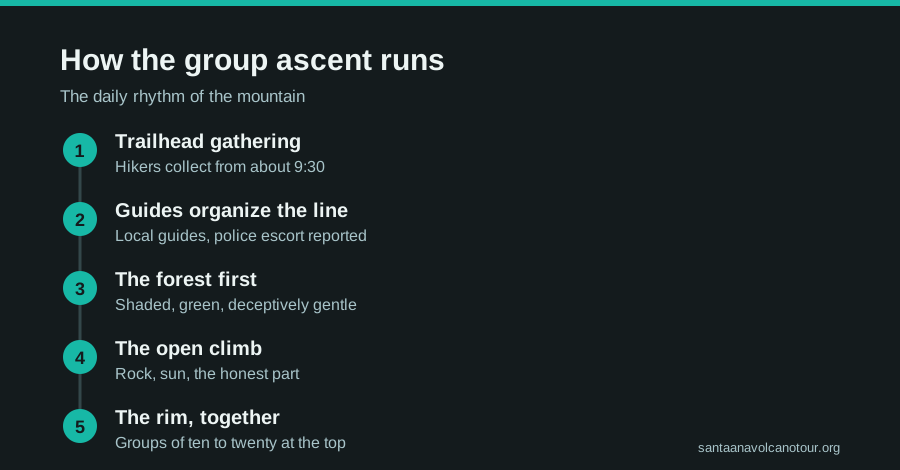
What does the group do on each stretch of the trail?
The climb breaks into three moods: an easier lower stretch through forest and open slopes where the group walks close together, a middle section where Izalco's black cone appears and everyone stops for photos, and a rocky final third where the group strings out and each person picks a line through loose volcanic ground to the rim.
The guides do not announce these stages, but after a few hundred climbs you feel the shifts as clearly as gear changes. This is how a typical morning walks, with times given as allowances inside the roughly two hours up rather than a schedule.
| Stretch | Ground underfoot | What the group does | Allow |
|---|---|---|---|
| Trailhead to the first viewpoints | Firm path, forest, open slopes | Walks bunched, chatting, finding a rhythm | The first part of the climb |
| The Izalco bend | Still firm, wider views | Stops as one; photos of the black cone below | A long pause |
| The rocky final third | Loose, sharp volcanic rock | Strings out; poles come into their own; guides watch the line | The slowest, most careful stretch |
| The rim | Bare rock, strong wind | Regroups, lake views, paletas; guides manage rim distance | Until the area closes ~13:00 |
| The descent | The same rock in reverse | Spreads out again, guides at front and back | About 1.5 h |
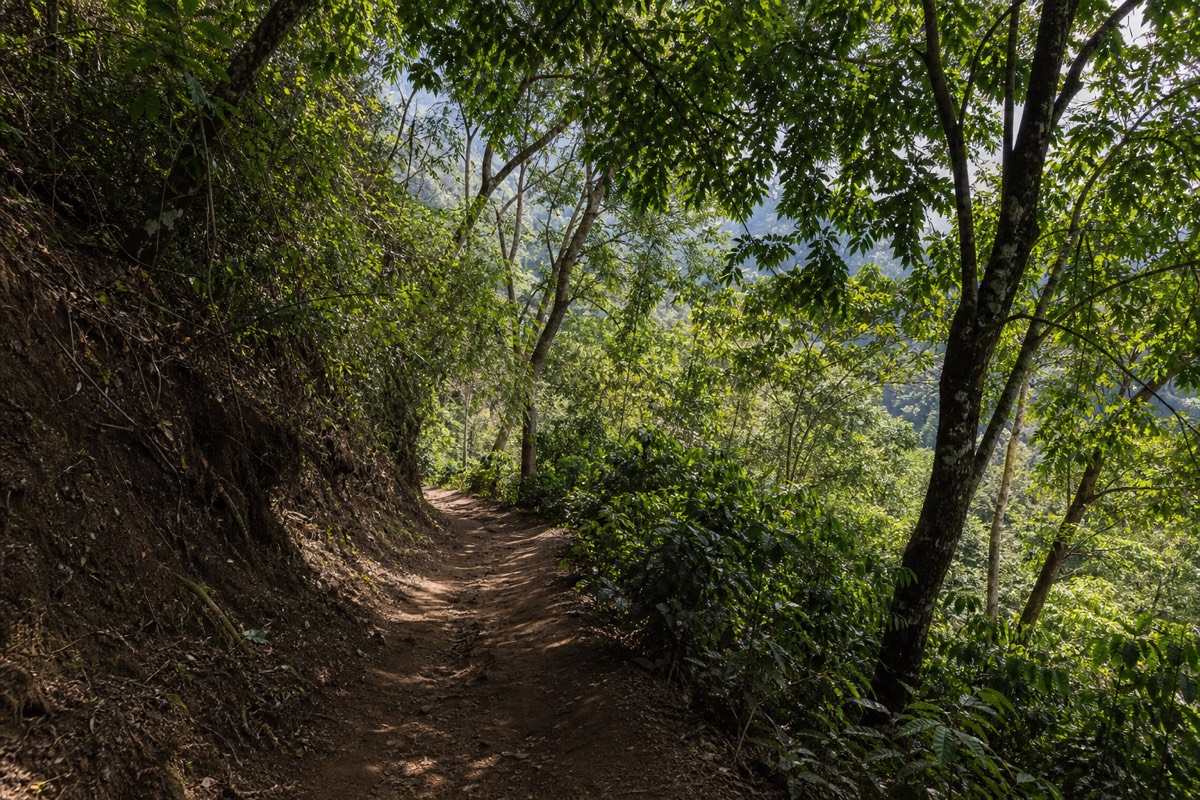
The lower stretch is where new friendships form; I have watched surfers and retirees trade snacks and life stories in the first half hour. The middle bend is theatre. Izalco sits below you looking like a textbook drawing of a volcano, and the entire group falls silent for a moment before the cameras come out; if you want to know why it is called the Lighthouse of the Pacific, three volcanoes from one park tells that story. The top third is where the guides earn their $4 per person: they know which slabs move, and they position themselves where a slip is most likely.
Nothing here is beyond a moderate walker; the whole route is 6.9 km with about 470 m of gain, and the group pace is deliberately kind. The point is that the mountain changes character three times, and knowing that in advance turns the rocky finish from a surprise into a stage you were expecting.
Who should skip the shared group, and who should skip the climb altogether?
Photographers who need to linger, families with very small children, and anyone whose fitness is very uneven should consider a private guide at about $35 to $40 rather than the $4 group. Anyone with a back or heart condition, pregnant travellers, and wheelchair users should skip the climb: the featured day tour excludes them for good reason, and the loose upper trail agrees.
I get asked this quietly at the trailhead almost every week, usually by someone worried about holding the group back, so let me answer it as plainly as I do in person. Most people who worry are fine. The group's pace is an average of everyone in it, the guides pause at the viewpoints on purpose, and recent hikers keep describing the trail as "not super easy but not as difficult as anticipated". Being the slowest walker in a communal climb is normal, and nobody minds.
The private guide makes sense for a narrower set. Serious photographers who want twenty minutes at the Izalco bend when the group wants five. Parents with a four-year-old who may need to be carried on the rocky finish. Mixed groups where one person is a marathon runner and another has not walked uphill in a decade, because a private pace can be set for the slower one without anyone feeling watched. It buys time and attention, not a different mountain, and it climbs within the same permitted window.
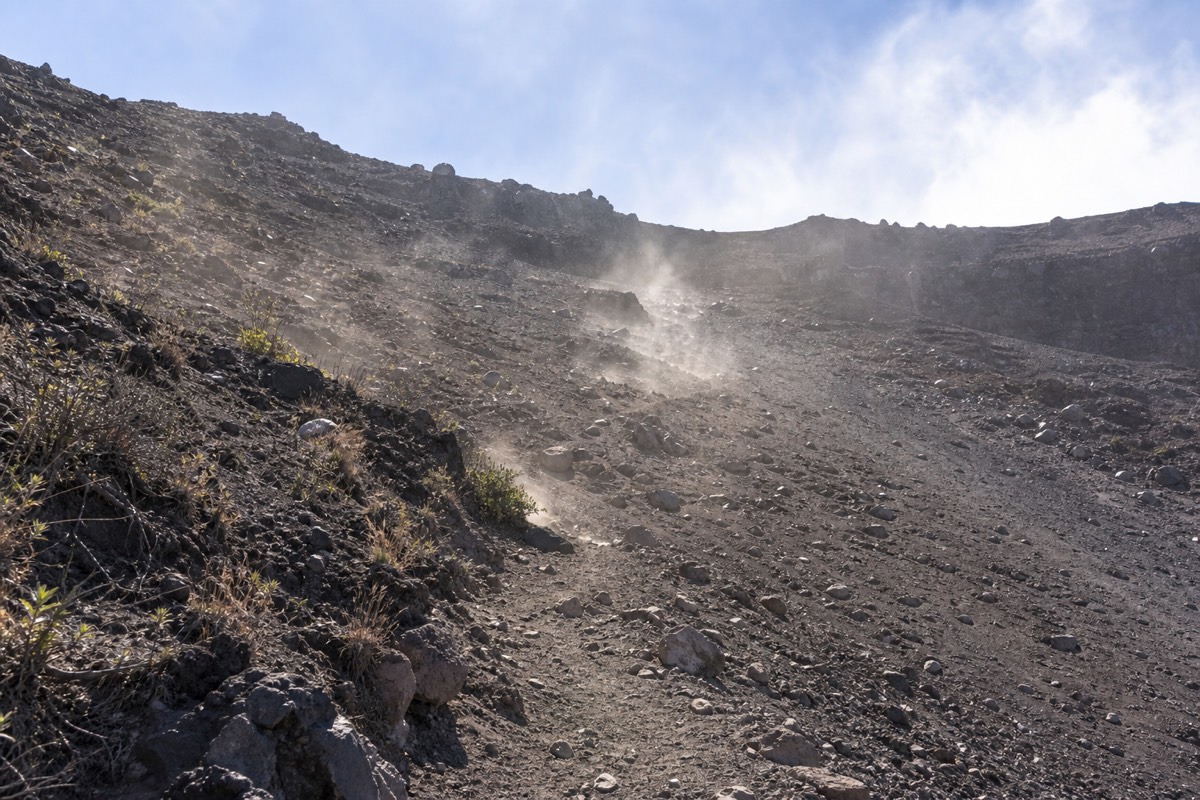
Skipping the climb altogether is a smaller, more serious category. The featured Viator day tour lists itself as not wheelchair accessible and unsuitable for anyone with back or heart problems or who is pregnant. That is not operator caution for its own sake; the final third is rubble that rolls underfoot and the summit is windy and exposed. If that describes you, Cerro Verde's gentle forest paths and Lake Coatepeque still make a beautiful day, and the easiest volcano to hike in El Salvador sets out the softer options. Solo travellers with different worries, mostly about safety and company, get their answers in what solo travellers ask me.
How does the group morning change between dry season and green season?
Same trail, same window, different sky and different crowd. From November to April the crater is at its clearest, the groups are bigger and the summit is cool but sunny. From May to October the slopes turn lush, afternoon cloud is a near-daily event, and the late-morning start exists precisely to get the group up and down ahead of it.
The daily ascent runs all year, and its clock does not move with the seasons; what moves is everything the clock is protecting you from. This is the contrast I watch play out across the calendar.
| Dry season (November to April) | Green season (May to October) | |
|---|---|---|
| Crater view | Clearest of the year, sharp turquoise | Bright windows between grey spells; afternoon cloud most days |
| Slopes | Drier, dustier, more open | Lush and green, sometimes slick lower down |
| Group size | Larger, especially weekends | Smaller; weekday mornings can feel almost private |
| Summit feel | Cool and windy, strong sun | Cooler, damper, wind carrying cloud through |
| Why the window matters | Peak colour in late morning | The late-morning start mostly beats the cloud build-up |
| Guide behaviour | Standard pacing | Same pacing, less lingering if cloud is moving in |
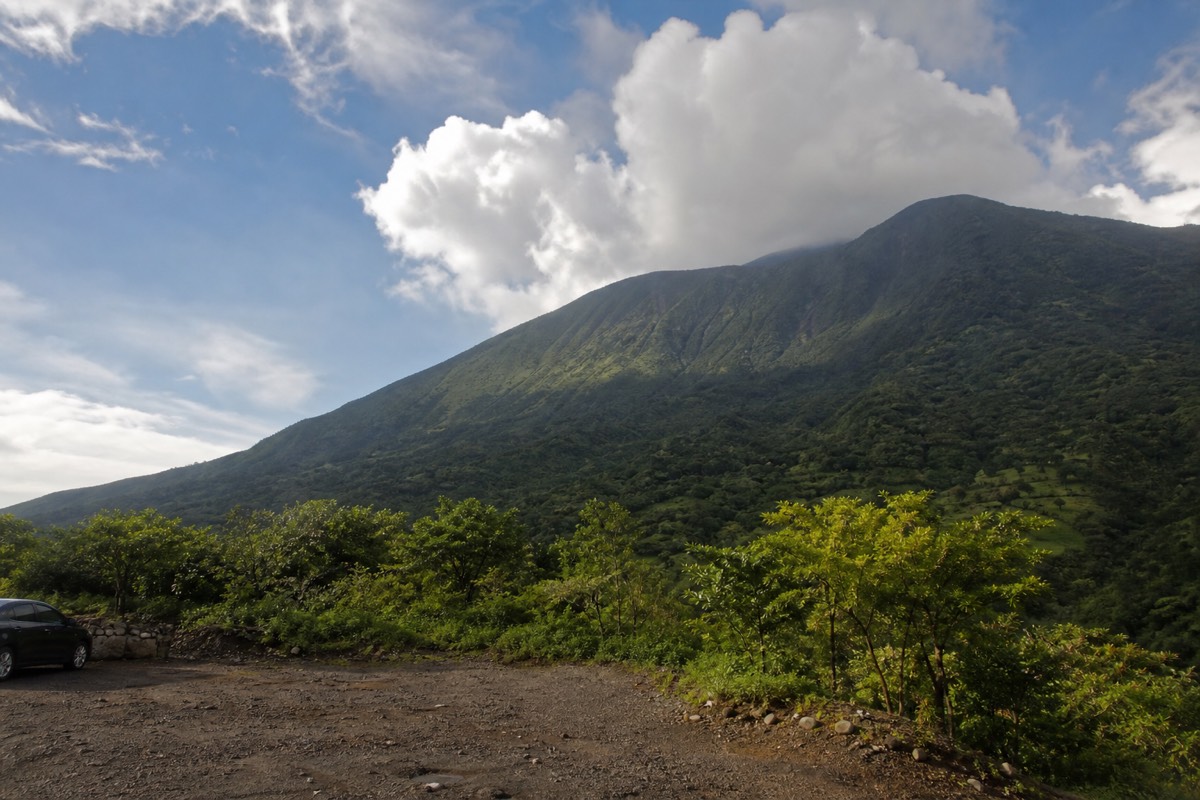
Dry season is the postcard, and it is when most international travellers come, so the trailhead crowd is bigger and the group can feel like a small festival. Green season is the version I secretly prefer on a weekday: half the numbers, wet-green slopes, and a lake that flickers between grey and brilliant as the cloud tears. The gamble is real, though. If the cloud arrives early the guides will still take you up, and you may stand on a rim looking into white; that is why they push the group to move at the start and why nobody dawdles at the top when the sky is building. My honest field notes from a wet-month climb are in the rainy season hike report, and the year-round calculus is in the best time to hike.
Whatever the month, the mechanics at the trailhead are identical: cash fees, the daily group, the 11:00 last start, the 13:00 crater closure. The seasons change what you see, never what you have to do.
What does the summit moment actually feel like after the shared climb?
Like a reward the whole group earned together. You crest the rim after two hours of steady work, the turquoise crater lake opens below with its drift of sulfur steam, Izalco and Coatepeque frame the horizon, and somebody hands you a paleta at 2,381 metres. The communal climb makes the view feel bigger.
That is the thing the schedule and the fees and the escort are all in service of. A daily, organized, gently supervised procession up El Salvador's highest volcano, timed so an ordinary traveller with $20 in cash and decent shoes can stand somewhere extraordinary by late morning and be down in time for lunch. I have made this climb hundreds of times. The group at the trailhead still makes it feel new.