What Solo Travelers Ask Me Before the Climb
A trail guide answers the questions solo travelers, including solo women, ask about hiking Ilamatepec: joining the group ascent, safety context, and logistics.
 By Carlos Hernández, Santa Ana Volcano tour guide & hiking specialist
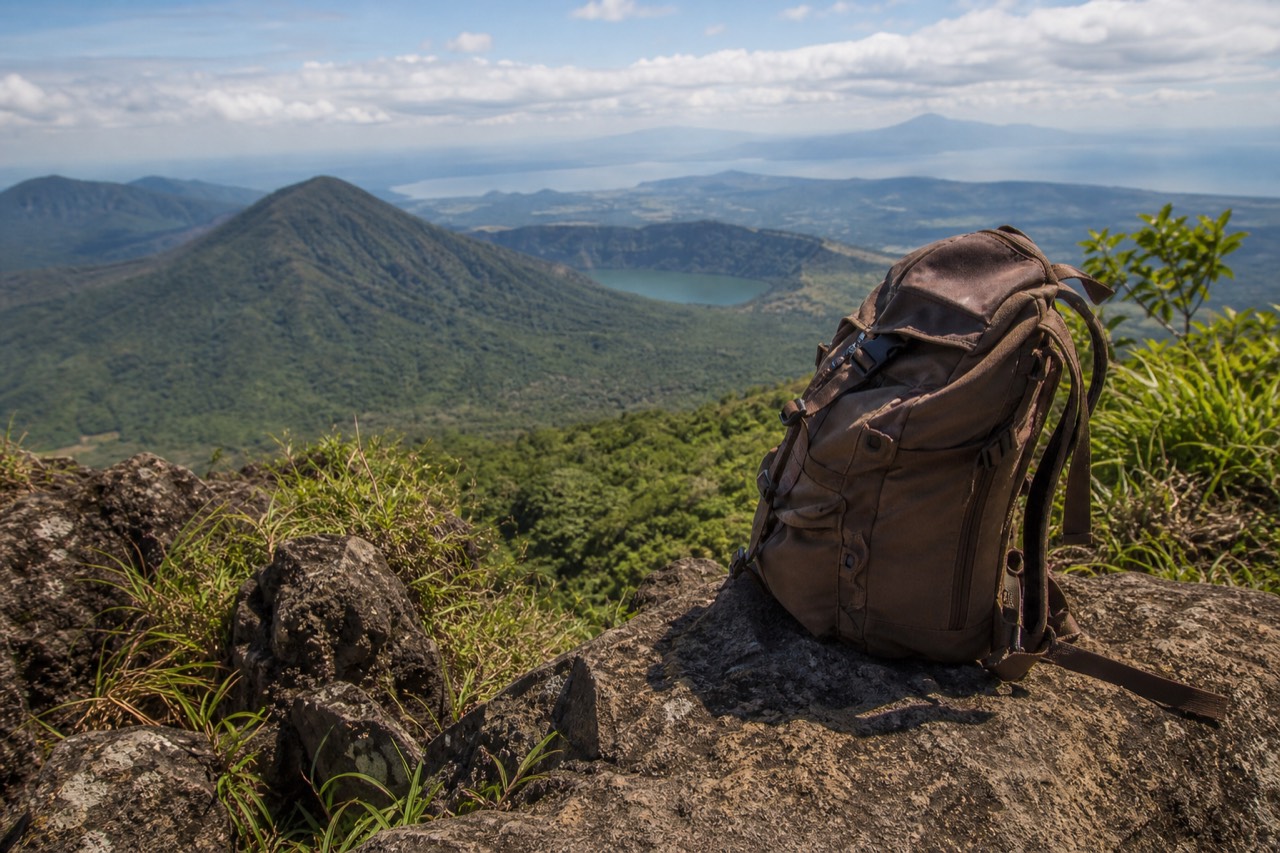
Almost every week since 2018, someone has found me near the trailhead or messaged me before their trip with a version of the same sentence: "I'm traveling alone. Is this a good idea?" By my own count I have guided over a thousand travelers up Ilamatepec, and a surprising share of them arrived in El Salvador solo. So instead of another generic safety article, here are the actual questions solo travelers ask me, answered the way I answer them on the trail, with the dust and the birdsong in the background.
Do you ever really hike Santa Ana Volcano alone?
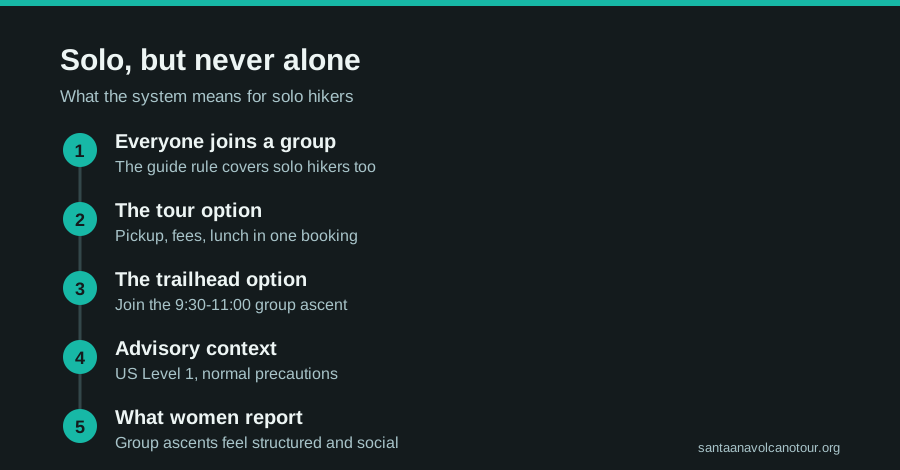
No, and this is the fact that changes everything for solo travelers: a local guide is mandatory for every hiker, and the mountain runs on a daily organized group ascent. You climb with whoever showed up that day, often dozens of people, with a guide leading. Solo travelers arrive alone but nobody walks alone.
The system surprises people. The group ascent gathers at the El Tibet trailhead, starts somewhere around 9:30 to 10:00, and the last start is 11:00. Everyone moves up together behind local guides, and hikers regularly report a tourist-police escort accompanying the group. The crater area closes around 13:00, so the whole mountain works on one shared rhythm. There is no scenario where you are picking your way up a volcano ridge by yourself wondering if you took a wrong turn.
I wrote a full explanation of why the no-guide option does not exist in my guide on hiking without a guide, but the short version for solo travelers is: the rule that removes your flexibility also removes your solitude problem. The mountain hands you a group.
How does a solo traveler actually join the climb?
Two clean options. Book the day tour from San Salvador or the beach towns and everything is handled: pickup, transport, admission, guide, lunch. Or get yourself to the trailhead independently before 11:00 and join the public group ascent for the ~$4 guide fee plus $3 entrance. Both put you inside a guided group.
Here is how I lay out the choice when someone asks me at the bottom of the trail:
| Option | How it works | Solo-traveler reality |
|---|---|---|
| Guided day tour | Hotel pickup in San Salvador, El Tunco or El Zonte, small group, admission and Coatepeque lunch included | Zero logistics; groups of around 10 mean you have company all day |
| Bus 248 DIY | From La Vencedora terminal in Santa Ana city ~7:30-7:40, about $0.70, ~2 h to the trailhead | Cheapest; requires basing in Santa Ana city the night before |
| Self-drive | ~1 to 1.25 h from San Salvador, $3 parking | Flexible, but you drive tired after the descent |
Notice what is missing: any workable public-transport route from San Salvador or El Tunco that reaches the trailhead before the ascent window shuts. The bus only works from Santa Ana city. This is exactly why so many solo travelers end up on the tour. It solves the one genuinely hard problem, which is not the hiking, it is the arriving. When solo guests ask me what I would do with limited days, I tell them to book the guided day tour and check live availability and prices on Viator, because free cancellation up to 24 hours means a solo plan can stay flexible.
What do solo women tell me about hiking here?
I can only report what solo female hikers tell me, and what they consistently describe is feeling comfortable inside the group system: a communal ascent, visible guides, a reported police escort, and plenty of other travelers, including other women hiking alone. Several have told me the trailhead felt more organized than hikes they did elsewhere in Central America.
I want to be careful here, because this is not my experience to claim. I am a male guide. What I have is eight years of conversations, and some patterns in what solo women report back to me. They mention that the group format removes the isolated-trail feeling that worries them most on other hikes. They mention the structure: a fixed start window, a counted group, guides who sweep the back. More than one has told me the paletas at the top were the moment the day turned from "checking a box" to "loving this country," and I wrote about that little summit economy in my paletas story.
They also ask sharper logistical questions than anyone else: exact bus times, exact fees, where to sit on the descent. So here is the fee sheet I quote, cash only in US dollars: entrance $3 for foreigners, group guide about $4 per person, parking $3 if driving, poles about $2 to rent. Small bills for all of it.
Is El Salvador safe enough for solo travel right now?
The current US State Department rating is Level 1, "exercise normal precautions," the lowest advisory tier there is, issued June 2025. Pair that with a record 4.1 million international visitors in 2025 and arrivals up 35% in early 2026, and the context for a solo trip is the strongest it has been in decades.
I am a trail guide, not a security analyst, so I send people to primary sources and let them read for themselves. The full advisory lives at travel.state.gov, and the volcano's own status, which is a separate question from street safety, is monitored continuously by MARN at snet.gob.sv. As of this writing there are no advisories or closures on the mountain. Here is the snapshot I give solo travelers who ask:
| Safety context | Current picture |
|---|---|
| US State Dept advisory | Level 1, exercise normal precautions (as of 2026-06-25) |
| Volcano status | Active, monitored stratovolcano; last eruption October 2005; no current advisories |
| Trail system | Mandatory local guide, daily group ascent, tourist-police escort reported |
| Tourism volume | 4.1 M international visitors in 2025; 1.7 M in Jan-Apr 2026, up 35% |
What does a solo day on the guided tour look like hour by hour?
Early pickup at your San Salvador hotel, or from El Tunco and El Zonte on the coast, a drive of roughly one to one and a quarter hours from the capital, the group ascent inside the 9:30 to 11:00 window, the summit and crater, the descent, then lunch and about two hours at Lake Coatepeque, and back by evening. Seven to ten hours door to door.
Solo travelers like a timeline more than anyone, because a timeline is company of a sort. Here is the shape of the day as recent guests describe it back to me, matched against the mountain's fixed schedule:
| Stage of the day | What it looks like | Solo note |
|---|---|---|
| Pickup | Hotel pickup in San Salvador; El Tunco and El Zonte are covered too, allow about two hours from the coast | You meet the group in the vehicle; introductions happen before the volcano does |
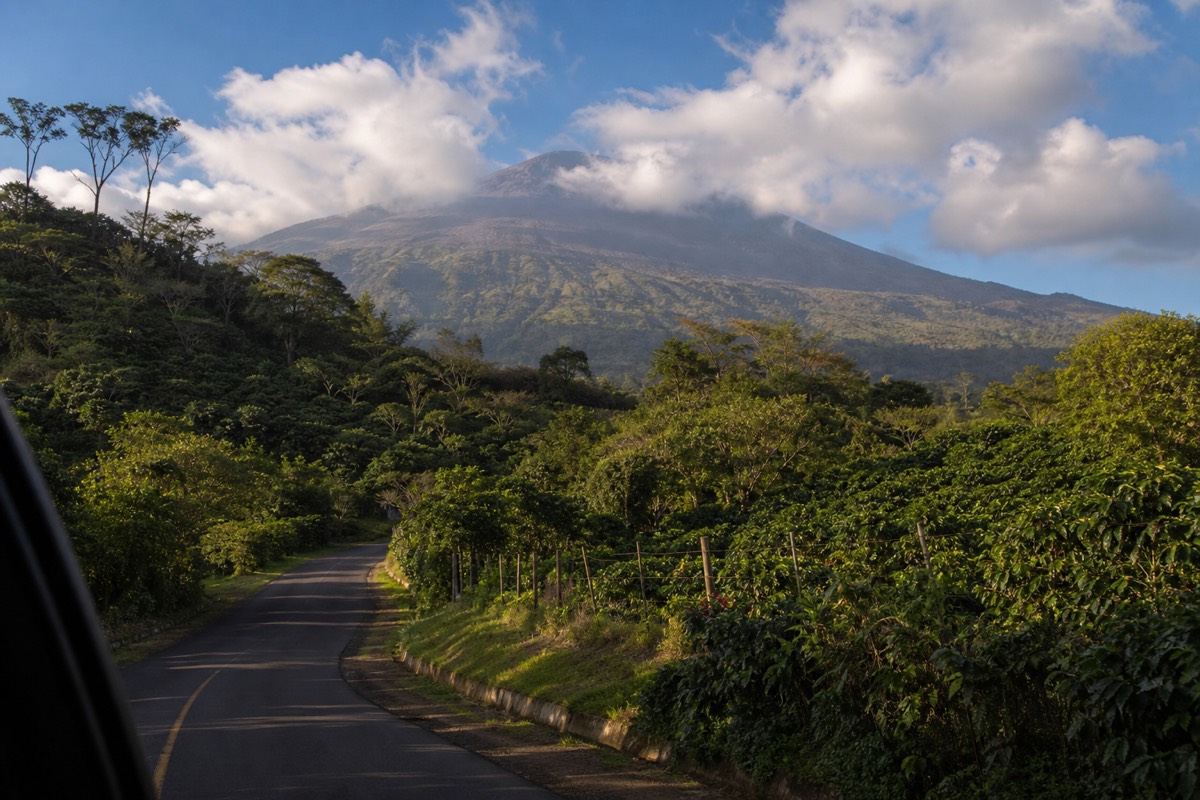
| The drive west | About 1 to 1.25 h from the capital, climbing into coffee country toward Cerro Verde | Sit by a window; the volcano appears long before you reach it |
| Trailhead | Poles for about $2, admission already handled | This is where the public ascent and the tour groups mix |
| The climb | Group start inside 9:30-11:00, roughly two hours up | Groups run around ten, so nobody is anonymous |
| The rim | Crater lake, paletas, photos; the crater area closes about 13:00 | Someone will offer to take your photo; say yes |
| The descent | About an hour and a half on rocky ground | Poles earn their $2 here |
| Lake Coatepeque | Lunch included, roughly two hours at the water | The part solo guests mention most, oddly |
| Return | Back to the city or the coast by evening | You have ten new acquaintances and one volcano |
The reason I show this to nervous solo hikers is the climb row. Recent departures run around ten people, and the maximum is twenty. That is small enough that by the summit you know names, and large enough that you never feel like a third wheel to a couple. Free cancellation to 24 hours also fits solo travel, where plans move. I wrote about the mechanics of the group forming at the trailhead in the morning group ascent, and it applies whether you arrived by tour or by bus.
Where should a solo traveler sleep the night before the climb?
It depends on how you plan to reach the trailhead. Base in Santa Ana city if you want the 7:30 bus 248 and the ~$17 DIY day. Base in San Salvador, El Tunco, or El Zonte if you are taking the guided day with hotel pickup. Do not base on the coast and expect public transport to make the 11:00 last start; it will not.
The night-before question is really the transport question in disguise. I hear it as "which town is safest for a solo traveler," and the honest answer is that the current US advisory is Level 1 nationwide, so I push people to choose by logistics instead.
| Base for the night | How you reach the trailhead | Solo verdict |
|---|---|---|
| Santa Ana city | Bus 248 from La Vencedora, ~7:30-7:40, ~$0.70, ~2 h | Best for budget solo travelers with a spare night; the city has a proper plaza and pupuserías |
| San Salvador | Guided day with hotel pickup, ~1-1.25 h drive; or rental car | Best if your trip is capital-based or short |
| El Tunco / El Zonte | Guided day with pickup, allow ~2 h; or rental car | Surf-town solo travelers use the tour almost by default |
| Anywhere, arriving after 11:00 | Nothing works | The mountain is closed to you that day |
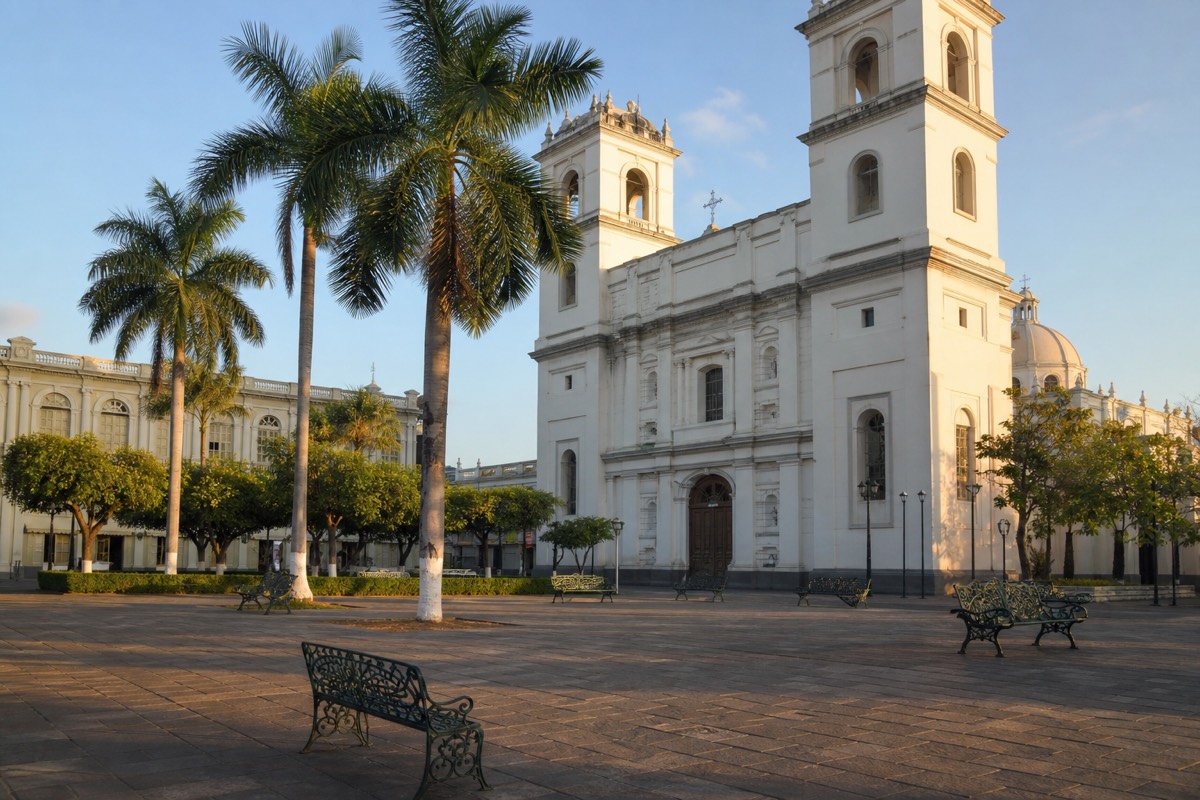
I get asked whether a solo woman should choose Santa Ana city over the capital, and here I can only pass along what guests tell me: those who based in Santa Ana city describe a walkable center and an easy bus morning, and those who came on the tour from the coast describe the pickup as the moment their solo trip stopped feeling solo. That is their reporting, not mine. Where to sleep in Santa Ana itself is covered in my where to stay guide, and the beach-side logistics live in the El Tunco approach.
Whatever base you pick, the rule underneath is the same. The mountain has one window, and your bed the night before is really a decision about how you reach it.
What mistakes do solo hikers make that I see every week?
Arriving at the trailhead after 11:00 with a bus story, carrying a single large note for a mountain that runs on coins, drinking too little water because the group's pace hides the effort, and drifting away from the group at the rim for a private photo where access is managed. Each one is a five-minute fix the night before.
Eight seasons of trailhead mornings, and the pattern holds. Solo travelers are usually the best prepared people in the group. When they slip, it is on the things nobody warns them about because everyone assumes a solo traveler has done their homework.
The clock first. The last start is 11:00 and it is not soft. I have watched independent hikers arrive at 11:15 from a late bus and there is nothing anyone can do; the group has formed and gone. If your plan involves the 7:30 bus 248 from Santa Ana city, be at La Vencedora early, because the ride to El Tibet runs about two hours and that leaves you a margin, not a cushion.
Cash second. Entrance $3, guide roughly $4, poles about $2, a paleta at the top: all small, all hand to hand, all in US dollars. A twenty makes you the person holding up the line.
Water third, and this one is subtle. Group pace on the ascent is steady rather than fast, and solo hikers who are fit find it easy and forget to drink. Two liters. The summit is cooler and windier than the base, which hides how much you are losing.
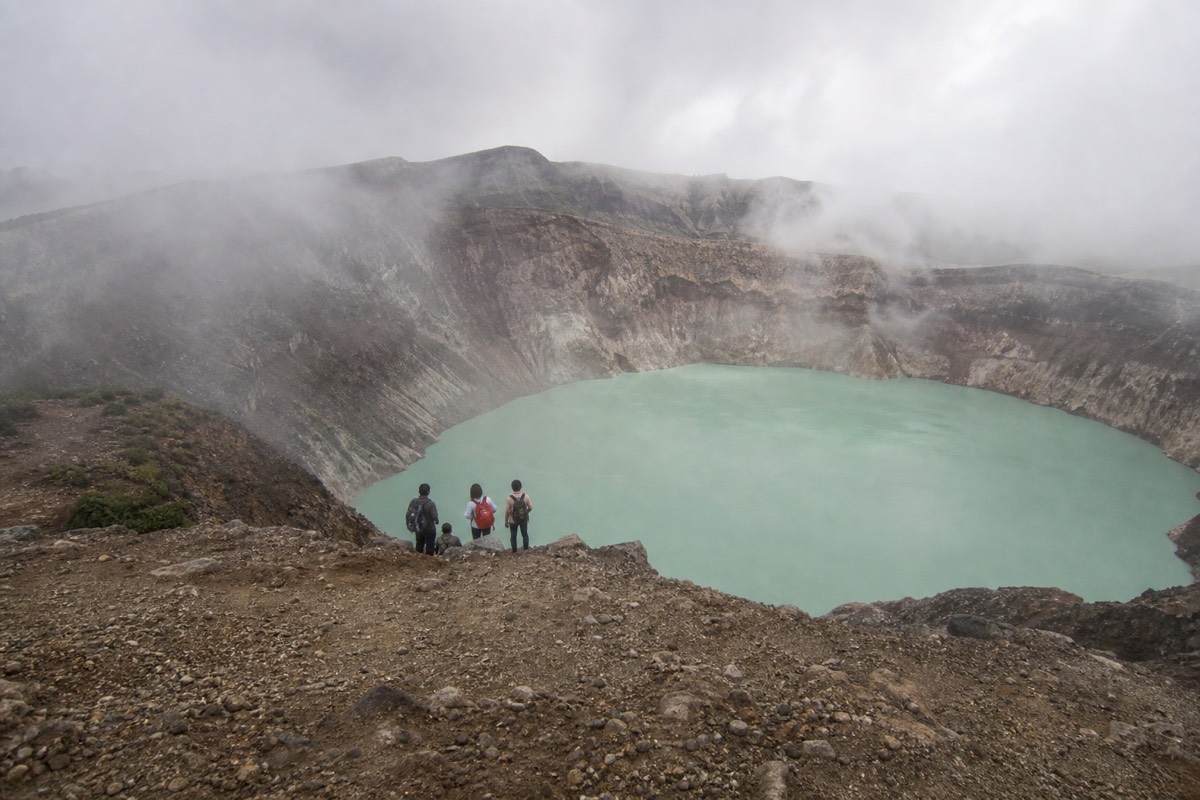
Rim behavior last. The crater rim is managed for a reason: the lake below is acidic and sulfuric, and swimming is both impossible and prohibited. Stay with the guides, get your photo where they get theirs, and give the mountain the ten quiet minutes it deserves. Solo women in particular have told me that staying visibly inside the group at the rim was part of what made the day feel easy, and I pass that along exactly as they said it. None of this is a reason to worry. It is a reason to break a twenty on Friday and fill two bottles on Saturday.
What are the questions I hear most, answered in one line each?
The greatest hits: yes you will find people to hike with, yes the tour picks up solo guests from San Salvador and the surf towns, no you cannot start after 11:00, yes the trail is moderate rather than brutal, and yes, you should carry two liters of water even on a cloudy day.
The rapid-fire version, straight from eight seasons of trailhead conversations:
| Question I get asked | My honest answer |
|---|---|
| "Will I be the only solo person?" | Almost never; solo travelers are a steady share of every group I see |
| "How hard is it really?" | Moderate: 6.9 km round trip, ~470 m gain, rocky near the top; AllTrails rates it 4.8 and hikers call it "not super easy but not as difficult as anticipated" |
| "Can I talk to the guides?" | The tour guides are bilingual; on the public ascent, Spanish helps but plenty of hikers manage with none |
| "What if the weather turns?" | The late-morning start usually beats the cloud; see my best time guide |
| "Can I swim in the crater lake?" | No, it is acidic and prohibited; the swimming lake is Coatepeque |
The last thing I tell every solo traveler is this: the summit is a social place. You will stand at the rim with strangers from five countries, everyone slightly out of breath, everyone staring at the same impossible turquoise. Somebody will offer to take your photo. You will take theirs. Solo is only the way you arrive.