Can You Hike Santa Ana Volcano Without a Guide?
A local guide is mandatory on Santa Ana Volcano. How the daily group ascent works, what the guide costs in cash, and how independent hikers join.
 Written with Carlos Hernández, Santa Ana Volcano tour guide & hiking specialist
Short answer
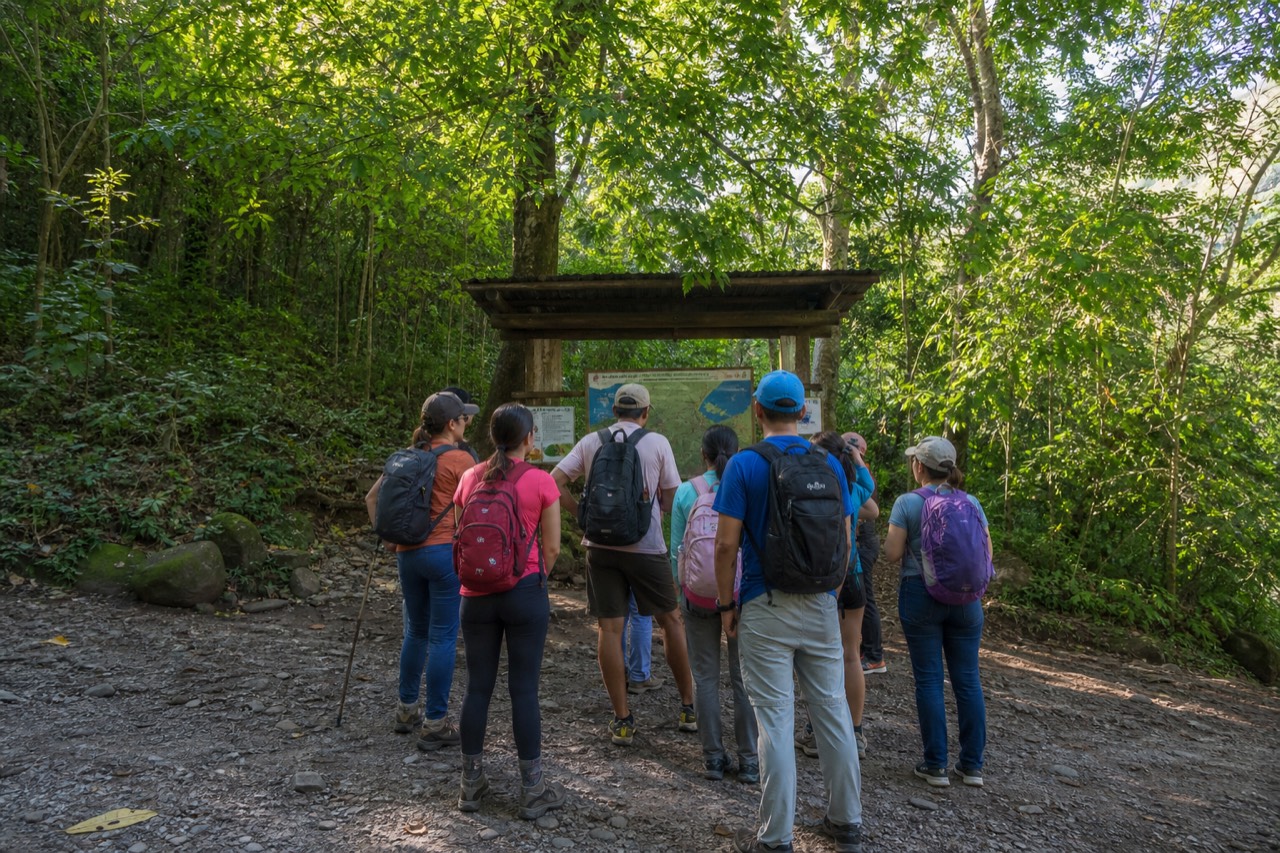
No. A local guide is mandatory for every hiker on Santa Ana Volcano. Everyone climbs in the daily group ascent, starting between 9:30 and 11:00 am, with a tourist-police escort reported on most days. The group guide costs about $4 per person in cash; private guides run $35 to 40.
Every week someone emails me the same plan: skip the guide, start at dawn, have the crater to themselves. I admire the instinct. I also have to tell them the plan is impossible, not inadvisable, impossible, because I have stood at the El Tibet trailhead most mornings since 2018 and watched the system work. Nobody walks past the guides. Here is how it actually runs, and why the rule exists on this particular mountain.
Can you hike the volcano without a guide?
No. A local guide is mandatory for everyone on Ilamatepec, with no exception for experienced hikers, solo travelers, or trail runners. All hikers climb together in the daily group ascent, which starts between about 9:30 and 11:00 am, and a tourist-police escort is reported on most days.
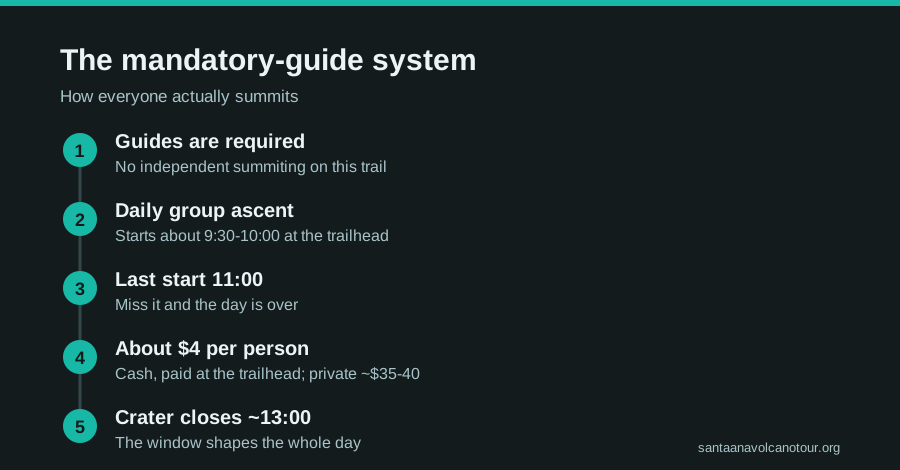
This is not a soft recommendation like you find on many trails, where a sign suggests a guide and nobody checks. Here the trail access is controlled at the bottom, the group forms in the parking area, and the guides walk with you the entire 6.9 km round trip. Independent hikers do not sneak through, and trying just costs you your place in that day's ascent.
I know how the rule reads to strong hikers: the trail is moderate, about 470 m of gain, rated 4.8 on AllTrails, roughly 2 hours up and 1.5 down. You do not need a guide to find the way. But wayfinding was never the point. Ilamatepec is an active, monitored stratovolcano, last eruption October 2005, and MARN's published guidance says the ascent is "not to be improvised": go accompanied, carry water, leave no litter. The guide system is how a small park runs a safe mountain at scale, and the current monitoring picture, no advisories, no closures, is public at SNET.
How does the daily group ascent actually work?
One organized ascent per day. Trailhead access opens around 7:00 am, the group typically moves out between 9:30 and 10:00, the last permitted start is 11:00, and the crater area closes around 13:00. Arrive after the last start and you do not climb that day.
The rhythm is the thing to internalize. You do not book a slot; you show up inside the window, pay, and fold into the group.
| Time | What happens at the trailhead |
|---|---|
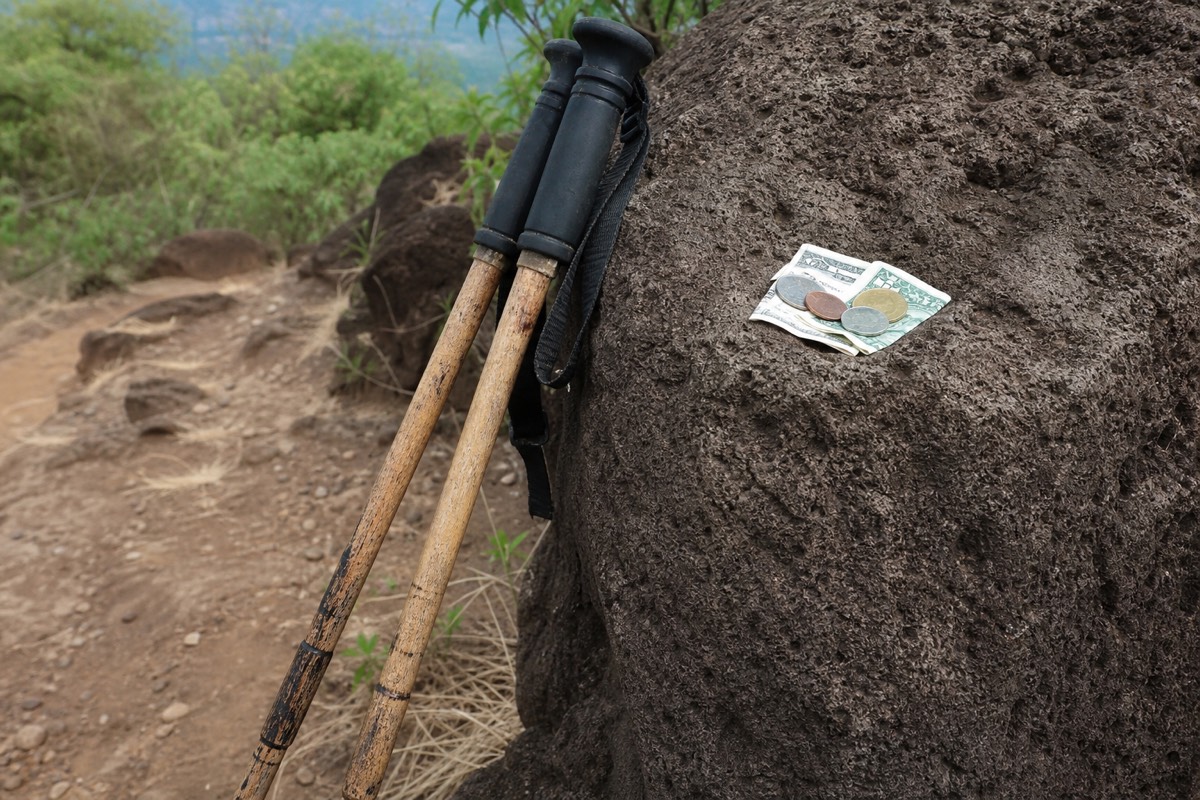
| ~7:00 | Access opens; early arrivals wait, buy coffee, rent poles (~$2) |
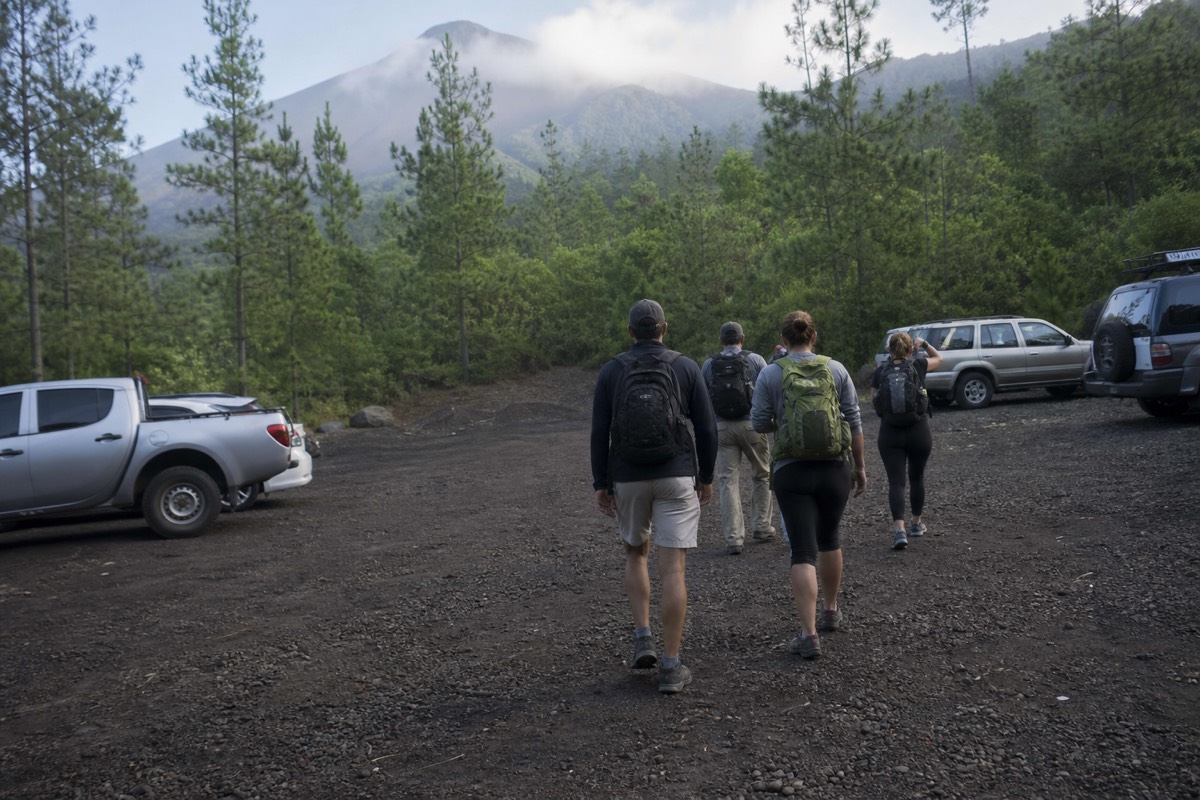
| ~7:30 to 9:30 | Hikers accumulate: bus 248 riders, drivers, tour vans |
| ~9:30 to 10:00 | The main group ascent sets off with local guides |
| 11:00 | Last permitted start; after this the mountain is closed to new hikers |
| ~13:00 | Crater area closes; everyone is on the way down |
| Mid afternoon | Trailhead empties until tomorrow |
The single daily window sounds restrictive until you see what it gives back. The group start means the late-morning climb mostly beats the afternoon cloud in green season, so crater visibility is engineered into the schedule. It concentrates the reported police escort where the hikers are. And it turns strangers into a temporary village for four hours; I have watched more travel friendships start in that parking lot than in any hostel bar. If the fixed clock wrecks your logistics from the coast or capital, that exact problem is what the pickup day solves, as I map out in how to get to the trailhead.
How much does the mandatory guide cost?
About $4 per person to join the group ascent, cash only. A private guide for your own party runs roughly $35 to 40. On top of that, everyone pays the park entrance, $3 for foreigners, $1.50 for Salvadorans, and drivers pay $3 to park. On the featured tour, admission is already included.
Cheap, in other words. The guide fee is the least of your costs and the mountain's best bargain.
| Guide option | Cost | What you get |
|---|---|---|
| Group ascent guide | ~$4 per person | Join the daily group, local guides pace and manage the climb |
| Private local guide | ~$35 to 40 | Your own party, same window, more attention |
| Featured guided day | In the tour price | Certified bilingual guide, transport, admission, Coatepeque lunch |
A note on what the $4 buys, because some hikers pay it grudgingly. The guides set a pace that gets mixed groups up the rocky final stretch without incident, they know the weather patterns hour by hour, and they carry the local knowledge that turns a walk into an education, which plants smell of maria luisa, where Izalco's 1966 lava ran, why the crater lake shifts color. One independent traveler's report from April 2025 put the entire DIY day at about $17 all-in: entrance, guide share, parking, and paletas at the summit. For what you stand on top of, the country's highest summit at 2,381 m, that is absurd value either way. The full cost picture across every option lives in the cost guide.
How do independent hikers join at the trailhead?
Arrive by about 10:30, pay the entrance and guide fees in cash at the trailhead, and wait for the group to form. No reservation exists for the group ascent; it is first come, walk together. Bus 248 riders from Santa Ana city and self-drivers all merge into the same single group.
The mechanics could not be simpler, which is why misinformation about them annoys me. You do not need a permit in advance. You do not need to find a guide in town. You show up, you pay, you climb.
The failure modes are all about the clock and the cash. Here is the checklist I give friends, everything in small US bills because nothing on the mountain takes cards.
| Cash item | Amount | Notes |
|---|---|---|
| Park entrance | $3 (foreigners) / $1.50 (Salvadorans) | Paid at the trailhead |
| Group guide | ~$4 per person | The mandatory piece |
| Parking | $3 | Drivers only |
| Pole rental | ~$2 | Optional, worth it for the rocky summit stretch |
| Paletas and snacks | A few dollars | Sold at the summit, a strange and wonderful fact |
| Buffer | $5 to 10 | Small bills; change is scarce |
The other preparation is physical, not financial: 2 L of water, sun protection, real shoes with ankle support for the loose rock near the rim. Recent hikers describe the trail as "not super easy but not as difficult as anticipated," which matches what I see. If any of that raises questions, the difficulty guide goes deeper.
Why is a guide mandatory on this volcano in particular?
Because Ilamatepec is an active, monitored stratovolcano with a sulfuric, acidic crater lake, a managed rim, and a loose-rock upper trail, and it receives a growing stream of hikers every morning. The guide system, with the daily group ascent and a tourist-police escort reported on most days, is how a small park keeps that mountain safe at scale, exactly as MARN advises.
Plenty of moderate trails elsewhere let you walk alone. This one does not, and the reasons are specific rather than bureaucratic. Start with the geology. Ilamatepec last erupted in October 2005 and is monitored continuously by MARN through SNET; the current picture is calm, with no advisories or closures, and you can check it yourself at SNET. Calm is not the same as inert. The agency's published guidance says the ascent is not to be improvised, and the guides are the mechanism that makes that guidance real on the ground.
| What the mountain presents | How the guide system answers it |
|---|---|
| Active, monitored stratovolcano | One daily group inside a fixed window, easy to hold or turn if monitoring changes |
| Sulfuric, acidic crater lake | The rim is managed; guides keep hikers off the unstable edge and away from the water |
| Loose rock on the upper trail | Guides pace mixed groups and pick lines through the rocky final stretch |
| Afternoon cloud in green season | The late-morning start is timed to beat it; the crater closes around 13:00 |
| Rising visitor numbers | The group ascent puts the reported police escort where the hikers are |
| First-time hikers at altitude | A steady 2 hours up, 1.5 down, set for the slowest comfortable walker |
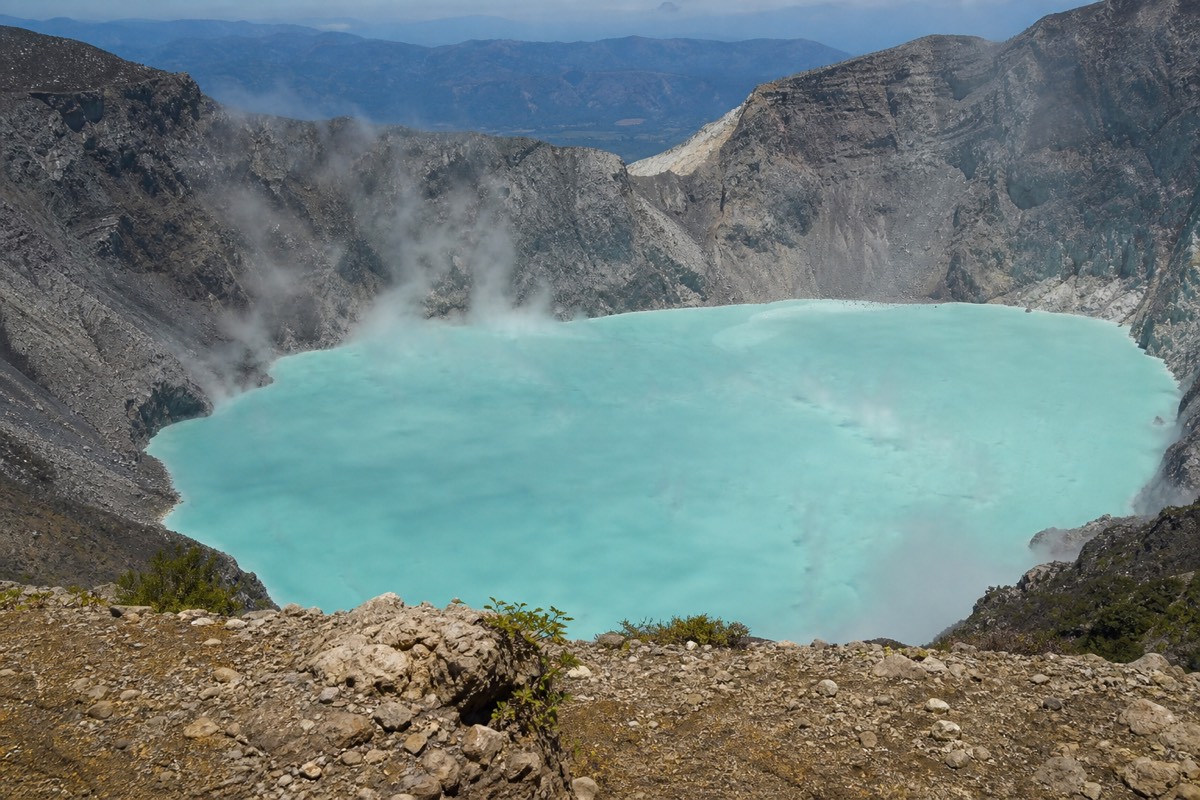
Then there is the crater itself. The turquoise pool at the summit is sulfuric and acidic; you cannot swim in it, you are not permitted to try, and access to the rim is managed for good reason. From below, the loose upper trail is the other hazard, and it is the one that produces the twisted ankles. A guide who walks that section daily reads it better than a visitor who has been on it for ten minutes.
Finally there is scale. El Salvador logged a record 4.1 million international visitors in 2025 and early 2026 is running 35 percent ahead, and this mountain is one of the country's signature days out. Groups form every morning at the trailhead, and a self-guided free-for-all on that rim would not last a season. The guide requirement is what lets the park stay open to everyone at $4 a head. I go into the volcano's activity in is Santa Ana Volcano active and the lake itself in the crater lake guide.
What do you actually need to join the group ascent?
Cash in small US bills, arrival inside the 9:30 to 11:00 window, and shoes that can handle loose rock. There is no permit, no reservation, no advance paperwork; the group guide fee of about $4 and the $3 entrance are paid at the trailhead. The featured guided day handles admission and transport, so its guests bring only the extras.
Because the rule sounds strict, people imagine a process. There is none worth the name. Here is the requirements grid as it stands.
| Requirement | Joining at the trailhead | On the featured guided day |
|---|---|---|
| Advance permit or booking | None; first come, walk together | Book the tour; the ascent itself needs nothing extra |
| Arrival | Inside the window, ideally by 10:30 | Timed by the operator |
| Park entrance | $3 foreigners / $1.50 Salvadorans, cash | Included |
| Guide fee | ~$4 per person, cash; private ~$35 to 40 | Included, with a certified bilingual guide alongside |
| Parking | $3 cash if driving | Not needed |
| Footwear | Closed shoes with ankle support | Same |
| Water | 2 litres, carried | Same |
| Health | Fit for 3 to 4 hours on rough ground | Operator advises against back, heart and pregnancy conditions; not wheelchair accessible |
| Language | Group guides are Spanish-first | Bilingual guide on the tour |
Two rows deserve emphasis. Cash is the one that trips foreigners, because ATMs give twenties and the tables want singles; break notes in town. Footwear is the one that trips everyone, because the trail is moderate on paper, 6.9 km round trip with about 470 m of gain, rated 4.8 on AllTrails, and moderate on paper reads as easy to a lot of people. The final stretch to the rim is loose volcanic rock, and sandals fail on it. Poles rent for about $2 and are the best money on the mountain.
The health row is where the two columns differ in tone. Trailhead joining has no formal screening; you pay and you climb. The featured day publishes its caveats plainly, and I repeat them because the parking area is a poor place to discover them. Whichever door you take, the mountain does the same thing to everyone: cooler and windier at 2,381 m than at the base, hot in the sun on the way up, and unforgiving of soft shoes on the way down. My full packing list is in what to bring.
What does the guide actually do between the trailhead and the rim?
In Carlos Hernández's experience guiding this trail since 2018, the guide sets a pace mixed groups can hold for roughly 2 hours up, picks the line through the loose rock below the rim, manages where people stand at the crater edge, and turns the group round before the 13:00 closure. The wayfinding is the smallest part of the job.
Strong hikers pay their $4 with a shrug, assuming they are buying a walking map. They are buying something else, and I say this as someone who has done the job for more than a thousand people by my own count.
| Trail segment | What the guide is managing | Your job |
|---|---|---|
| Trailhead and group forming | Headcount, the pole rental, the start time inside the window | Pay, hydrate, be ready when the group moves |
| Lower forest and shrub | A pace the slowest comfortable walker can hold; the first water stops | Settle in; do not race ahead |
| Open upper slopes | Sun and wind exposure, the first views of Izalco, spacing the group | Layer up or down; drink |
| Loose rock below the rim | Line choice, footing, keeping the descent line clear | Short steps, poles planted, eyes down |
| Crater rim | Where people stand, how long the group stays, the 13:00 turn-round | Look, photograph, stay behind the managed edge |
| Descent | The rocky top section again, now tired legs; keeping the group together | Poles again; the ankles fail on the way down |
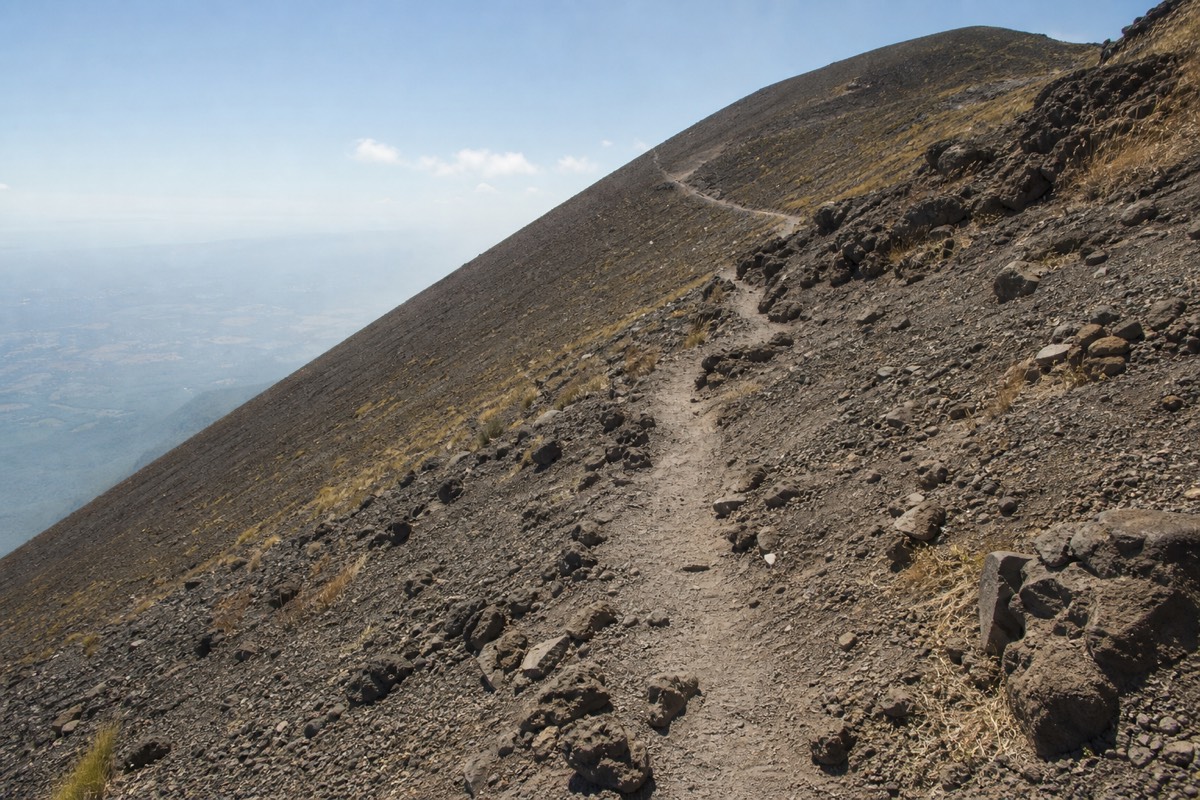
The pacing is the part visitors underestimate. A group of ten strangers with different lungs and different shoes moves at the speed of its most tired member, and a good guide reads that member early and sets the rhythm before anyone blows up. Two hours to the rim is roughly what that rhythm produces on this trail; it feels slow at the bottom and about right at the top.
The rim is the part that justifies the whole system. The lake is acid, the edge is managed, and the wind at 2,381 m is stronger than anything the trail below prepared you for. Guides decide where the group stands and when it leaves, and on the mountain I know that decision is worth more than any map. Recent hikers on the featured day mention their guides by name, Josue, Gaby, Diego, and describe the pacing as the reason the climb felt "not as difficult as anticipated." That matches what I see from the trail every week. If the difficulty question is still nagging, the difficulty guide walks the same segments with the numbers attached.
How does the daily window play out across the seasons?
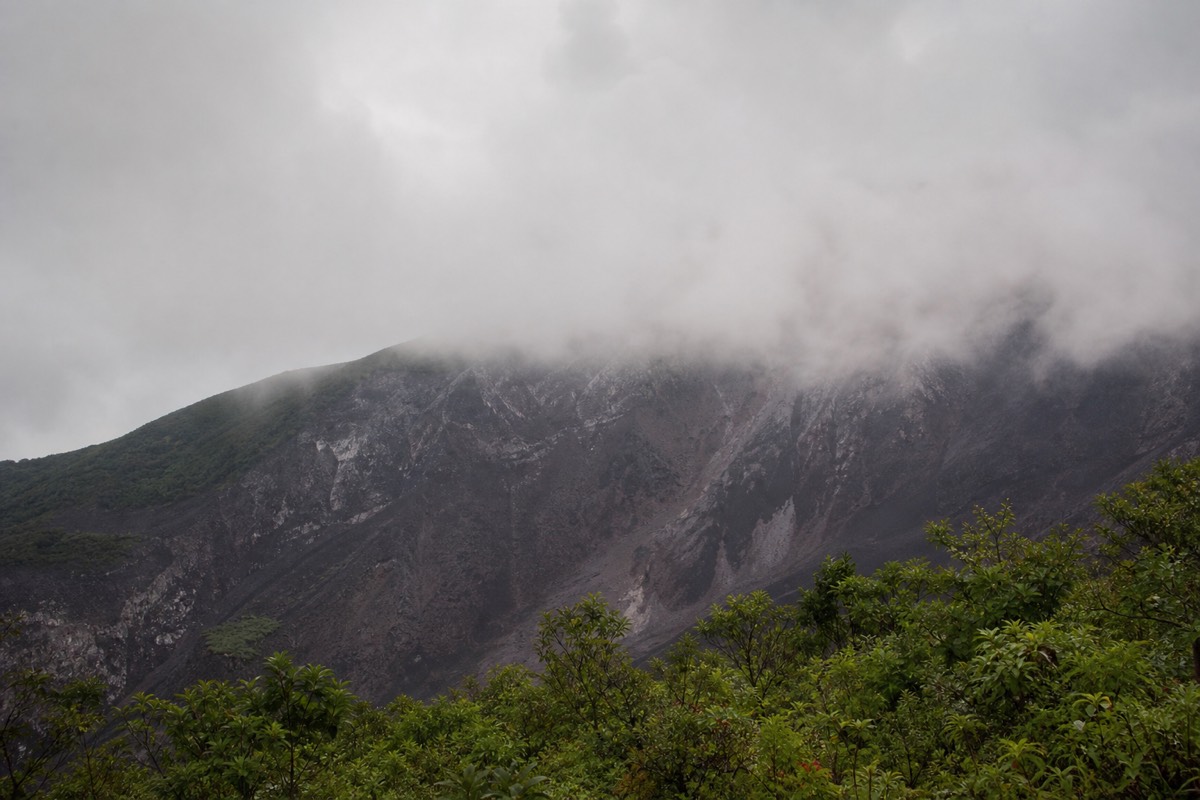
The window itself never moves: group start 9:30 to 10:00, last start 11:00, crater closed around 13:00. What moves is the cost of being at the back of it. In dry season, November to April, a late start costs you crowd and heat; in green season, May to October, it can cost you the view, because cloud gathers over the crater in the afternoon.
The single daily ascent is often described as a restriction. On this mountain it doubles as a weather strategy, and once you see that, the schedule stops feeling arbitrary.
In green season, cloud builds over the summit as the day warms, and the late-morning start is timed so that most groups reach the rim before it closes in. Most days it works: the guests who left at 9:45 look down on a turquoise lake, and the ones who scraped in at 10:55 may look down on grey. So the wet-month advice is stricter than the dry-month advice. Be at El Tibet by 9:30, pay quickly, and be in the first movement of the group. The rainy season hike report shows what a marginal morning looks like from the inside.
In dry season the crater is at its clearest and the trailhead at its busiest, especially on weekends. Here the window's cost is different: a late arrival means a bigger group forming behind you, a slower shuffle through the cash tables, and more people on the loose upper rock at once. The view will still be there at 12:30; the calm will not. Sun protection and extra water matter more than the rain layer, though the summit runs cooler and windier than the base in every month and the warm layer stays in the bag year round.
Whatever the season, the mountain's monitoring picture is public and currently calm, with no advisories or closures, and the group system is what would let the park respond quickly if that changed. It is worth remembering that the same clock governs everyone, including tour guests: the featured day plans its pickup around the window, which is why coast and capital travellers who cannot make bus 248 tend to book the guided day tour rather than gamble on a chained-bus morning. Month-by-month detail is in best time to hike.
What mistakes does Carlos see at the trailhead every week?
By his own count of more than a thousand travellers since 2018, the recurring errors are arriving after the 11:00 last start, arriving with only large notes, trying to slip past the guides, wearing sandals for a loose-rock trail, and treating the 13:00 crater closure as a suggestion. None of them is a fitness problem. All of them are avoidable before the first step.
I keep this list because it barely changes from year to year. The trail is moderate and hikers manage it; the trouble happens in the parking area.
| The mistake | What it costs | The fix |
|---|---|---|
| Arriving after 11:00 | The whole day; the trail is closed to new hikers | Work backward from 11:00 and aim for 10:30 |
| Only $20 notes | A slow queue and, sometimes, no change | Break notes in town the evening before |
| Trying to go without a guide | Your place in that day's group; nobody gets past | Pay the ~$4 and join; it is the mountain's best bargain |
| Sandals or thin trainers | Turned ankles on the loose upper section | Closed shoes with ankle support, poles for ~$2 |
| Lingering on the rim past 13:00 | A stressed guide and a rushed descent | Photograph early; be ready when the group turns |
| No water, no layer | A hard, cold summit | 2 litres and a windbreaker, whatever the calendar says |
| Chained buses from the capital or the coast | Arriving after the window | Sleep in Santa Ana city for the 248, or take the pickup |
The one that frustrates me most is the guide dodge, because it wastes a morning for no reason. I understand the instinct, I have it myself on other mountains, but here the access is controlled at the bottom, the group forms in front of the guides, and a tourist-police escort is reported on most days. Nobody sneaks through. What you can do is choose your door: the group at the trailhead for about $4, a private guide for roughly $35 to 40, or the featured guided day with pickup and admission included. All three end on the same rim.
The other pattern is the traveller who has been careful about everything except the return. Once the crater closes around 13:00 and the 1.5 hour descent is done, the trailhead is emptying and the day is spent; bus riders should have sorted the ride down before they climbed, drivers should have fuel, and everyone should have eaten. The people who look happiest at 15:00 are the ones sitting down to an included lunch at Coatepeque, and I do not think that is a coincidence. If you want the whole list of first-day errors, from every base and not just the trailhead, it lives in first-time mistakes, and the money side of avoiding them is in the cost guide.
Is joining at the trailhead better than booking the guided day?
They solve different problems. Trailhead joining is unbeatable if you are already in Santa Ana city with a morning free. The guided day exists for everyone else: it moves the pickup, the window, admission, and lunch into one plan, which is why most capital and coast visitors take it.
I genuinely recommend both, depending on who is asking. Staying near La Vencedora terminal with $10 in your pocket? Ride the 248 and join the group; it is one of the great cheap adventures in Central America.
But if you are based in San Salvador, El Tunco, or El Zonte, the arithmetic changes, because no public route from those bases reaches the trailhead before the 11:00 cutoff. That is when I tell people to stop optimizing: book the guided day tour and check live availability and prices on Viator. It runs 4.9 stars across 869 reviews, admission is included, groups average around 10, and the day ends with an included lakeside lunch at Coatepeque instead of a scramble for the last ride down.
Either way, you will climb with a guide, because everyone does. The question was never guide or no guide. It is which door you walk through to reach the same rim, and both doors open onto the same turquoise crater, the same wind, the same slightly ridiculous paleta at 2,381 m.