How Many Days Is Enough for El Salvador?
Most visitors do 4-7 days in El Salvador, covering the Santa Ana summit, Lake Coatepeque, a beach stretch and the Ruta de las Flores. Here is how to shape it.
 Written with Carlos Hernández, Santa Ana Volcano tour guide & hiking specialist
Short answer
Most visitors find 4 to 7 days enough for El Salvador's highlights, the Santa Ana volcano summit, Lake Coatepeque, a beach stretch at El Tunco or El Zonte, and the Ruta de las Flores coffee towns. The country is compact, with the volcano about 1.25 hours from San Salvador and 2 from the surf coast, so short trips work.
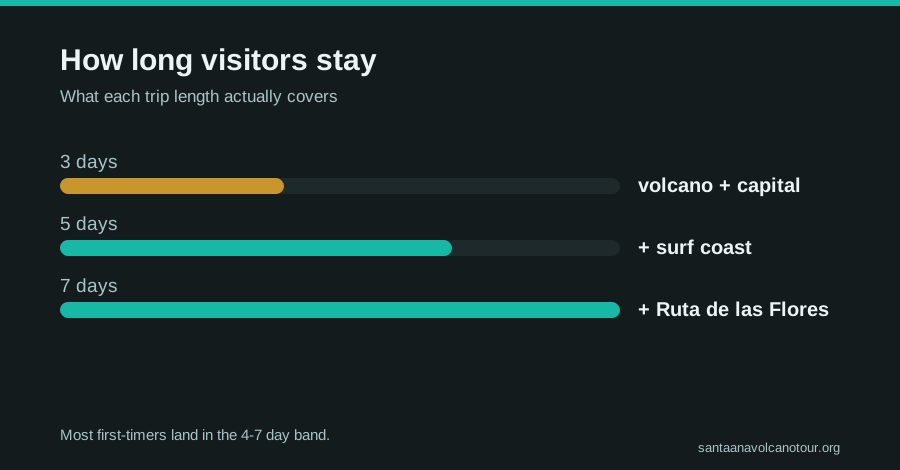
A hiker from Texas once told me at the crater rim that she had given El Salvador two days as a layover experiment and was already rebooking flights to stretch it to a week. I hear a version of that story most months. The country is small enough that nothing is far, which fools people into planning too short, and rich enough that every extra day earns its place. After eight years of guiding here I have watched every trip length succeed and fail. Here is what actually fits in 3, 5 and 7 days, and where the volcano belongs in each.
How many days do you need in El Salvador?
Four to seven days is the range most visitors settle on, and it covers the classic set: the Santa Ana summit, Lake Coatepeque, two or three beach days on the Surf City coast, and the Ruta de las Flores. Three days works as an intense sampler. Beyond a week you are adding depth, not ticking new must-sees.
The reason short trips work here is distance, or the lack of it. The volcano sits about 1 to 1.25 hours' drive from San Salvador and about 2 hours from El Tunco, and most of the western highlights cluster within that same compact triangle. Compare that with neighbors where a single transfer eats a day. The country's density is exactly why arrivals are exploding, a record 4.1 million international visitors in 2025 and another 35% jump in early 2026: people have figured out how much fits in a normal vacation window.
| Trip length | What fits honestly | Who it suits |
|---|---|---|
| 3 days | Volcano + lake day, one beach or city day, departure | Layovers, weekenders from the region |
| 5 days | Volcano + lake, 2 beach days, Ruta de las Flores day | Most first-timers, the sweet spot |
| 7 days | All of the above plus Santa Ana city, Cerro Verde, slow days | Hikers, surfers, coffee people |
| 10+ days | Add the east, more summits, real immersion | Backpackers, repeat visitors |
My bias, after guiding more than a thousand hikers up this trail by my own count: five days, planned around one non-negotiable volcano morning.
What does each trip length actually look like?
Shape the trip around fixed windows first. The volcano's group ascent starts between 9:30 and 11:00 and only happens once a day, so it claims a full morning wherever it lands. Beaches and coffee towns are flexible and absorb whatever days remain, which is why every good itinerary here is volcano-first.
Here are the three shapes I recommend most often, using San Salvador or the beach as base:
| Day | 3-day sprint | 5-day classic | 7-day full loop |
|---|---|---|---|
| 1 | Arrive, San Salvador | Arrive, El Tunco beach | Arrive, El Tunco beach |
| 2 | Volcano + Coatepeque day | Beach, surf morning | Beach, surf morning |
| 3 | Beach morning, fly out | Volcano + Coatepeque day | Volcano + Coatepeque day |
| 4 | Ruta de las Flores | Overnight Santa Ana city | |
| 5 | Depart | Ruta de las Flores | |
| 6 | Cerro Verde or Coatepeque lakeside | ||
| 7 | San Salvador, depart |
Notice the volcano day never lands on arrival day or departure day. It is a 7 to 10 hour commitment door to door with an early pickup, and jamming it against a flight is the most common planning mistake I see. The other frequent question, whether the summit is even worth a scarce vacation day, gets my full answer in is the volcano worth it. Spoiler: it is the day people write home about.
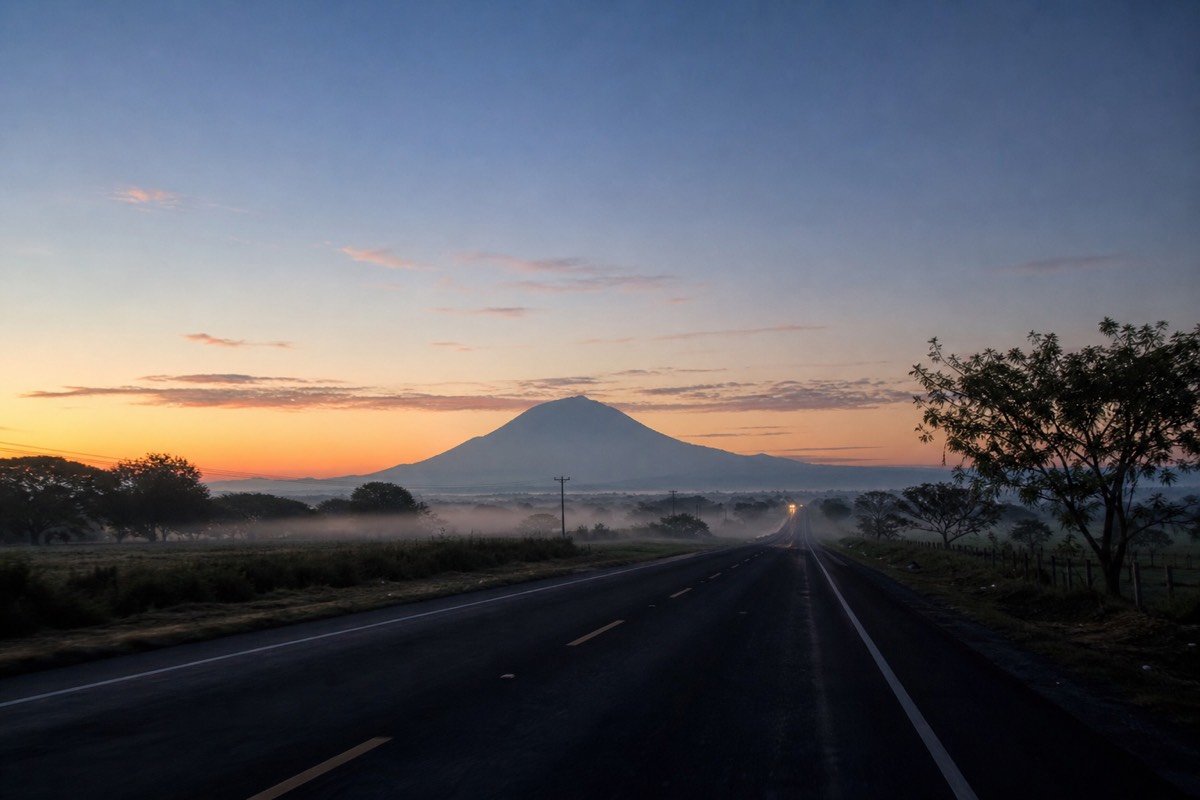
What does the volcano day look like hour by hour inside a short trip?
Allow a 7 to 10 hour door-to-door day: an early hotel pickup in San Salvador, El Tunco or El Zonte, roughly 1 to 1.25 hours' drive from the capital or about 2 from the coast, the group ascent starting between 9:30 and 11:00, about 2 hours up and 1.5 down, lunch at Lake Coatepeque, then home by evening.
Planning a short trip means knowing exactly how much of a day each fixed item eats, and this one eats all of it. That is not a complaint, it is the reason it works: everything hard about the volcano is folded into one calendar square, and the other days stay flexible. Treat the times below as planning allowances, not a promise from anyone.
| Time (allow) | Stage | What matters for the itinerary |
|---|---|---|
| Early morning | Hotel pickup, San Salvador, El Tunco or El Zonte | Sleep near a pickup point the night before |
| ~1-1.25 h from the capital, ~2 h from the coast | Drive to the Cerro Verde trailhead | No public bus makes this window; a car or the tour does |
| ~9:30-11:00 | Group forms and starts; last start 11:00 | The one fixed clock of the whole trip |
| ~2 h | Climb to the 2,381 m rim | Forest first, then loose rock; poles rent for $2 |
| ~13:00 | Crater area closes | You are on the descent, ~1.5 h down |
| Afternoon | Lunch at Lake Coatepeque | Included on the tour; DIY hikers add their own transport |
| Evening | Back at the hotel | Do not book anything else that day |
The row that decides your itinerary is the second one. From Santa Ana city, bus 248 leaves around 7:30 to 7:40 and reaches the trailhead in about two hours, in time for the group. From San Salvador or the beach there is no public route that does the same, which is why the day either runs on a rental car or on the bundled pickup. On a five-day trip that is not a hard call.
The last row is the one people ignore. After 6.9 km, about 470 m of gain, a lakeside lunch and a couple of hours in a van, nobody wants a dinner reservation across town. Leave the evening open, and if you want to know what the group itself feels like on the way up, the morning group ascent is my walk-through of it.
How should a four-day trip split between the beach and the volcano?
Four days is the tightest length that still feels like a trip: settle at El Tunco or San Salvador, give day two to the beach, day three to the volcano and Lake Coatepeque, and use day four as a half day before the flight. If the flight is early, swap the volcano to day two and rest on three.
The article covers three, five and seven days, and four is the gap people keep asking me about, because it is what a long weekend plus a day off produces. It works, with one rule: the volcano day never touches arrival or departure. A 7 to 10 hour commitment with an early pickup does not belong next to a flight, and jamming it there is the mistake I see most on short trips.
| Day | Beach-first shape | Volcano-first shape |
|---|---|---|
| 1 | Arrive, El Tunco or El Zonte | Arrive, San Salvador |
| 2 | Surf or beach morning, slow afternoon | Volcano + Coatepeque day, home by evening |
| 3 | Volcano + Coatepeque day, home by evening | Move to El Tunco, beach afternoon |
| 4 | Easy morning, depart | Beach morning, depart |
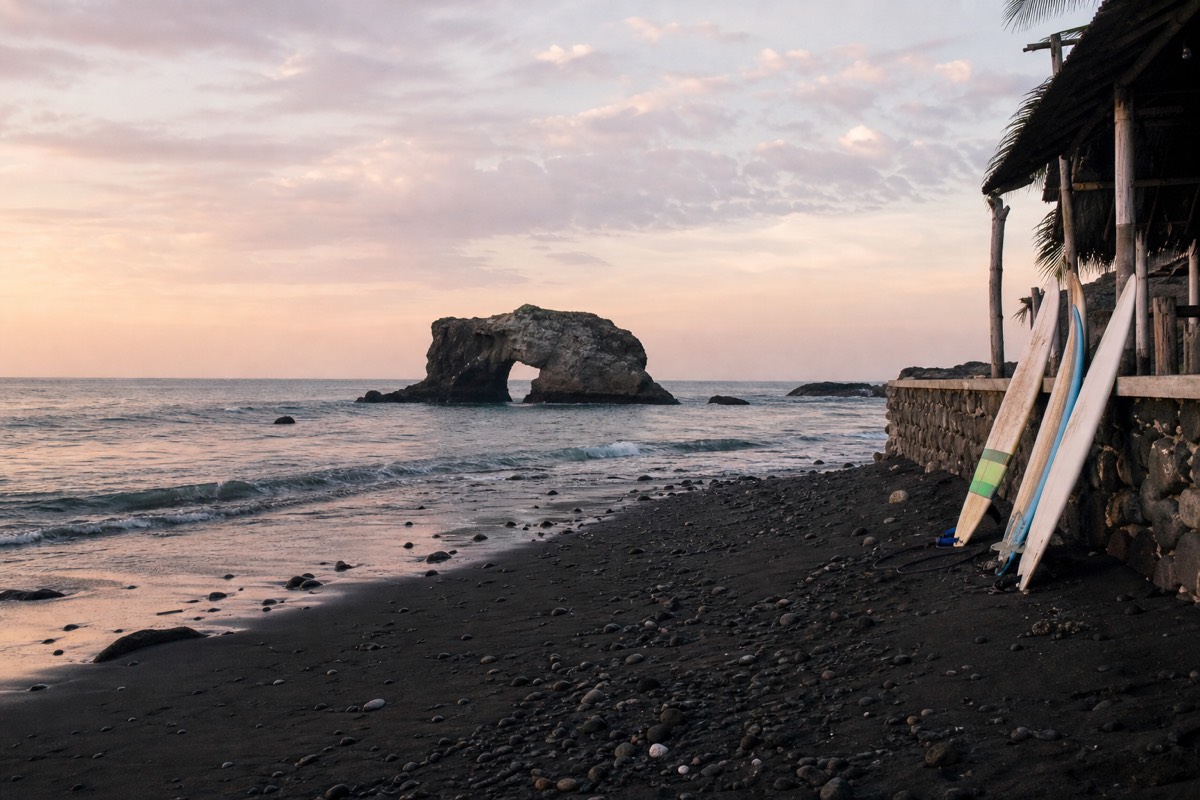
Which shape to pick comes down to your flight and your legs. Beach-first suits an afternoon arrival: you unwind by the water, and by day three you are rested for the climb. The tour picks up from El Tunco and El Zonte, so the roughly two-hour drive is somebody else's job. Volcano-first suits a morning arrival into the capital, since pickup from any San Salvador hotel makes day two easy, and it puts the physical effort early while you are fresh, with the beach as recovery.
Either way, the fourth day is a half day and should be treated as one. The country's density lets you do a lot in four days, but the arithmetic is unforgiving: one fixed volcano morning, one flight, and two beach or city stretches around them. If a fifth day appears, the Ruta de las Flores is the obvious use, and the shapes in the tables above already show where it slots.
How hard is the volcano day, and how does that shape the days around it?
Moderate, not extreme: 6.9 km round trip, about 470 m of gain, roughly 2 hours up and 1.5 down, rated 4.8 on AllTrails, with a rocky final section where ankle support and the $2 rental poles help. Most fit visitors manage it. Plan it early in the trip while legs are fresh, and give the next day something gentle.
I have guided more than a thousand people up this trail by my own count, and the honest range of who makes it is wide: teenagers, grandparents, surfers who have not walked uphill in a year. The recurring review line, "not super easy but not as difficult as anticipated," is accurate. What tires people is the sun and the loose rock near the top, not the distance.
| Requirement | Detail | What it means for your itinerary |
|---|---|---|
| Distance and gain | 6.9 km round trip, ~470 m up | A half-day of walking, a full day with transport |
| Timing | ~2 h up, ~1.5 h down, 3-4 h total | Fits inside the 9:30-13:00 window |
| Difficulty | Moderate, AllTrails 4.8 | Fine for most; not for wheelchairs, back or heart conditions, pregnancy |
| Surface | Forest path, then rocky and loose near the rim | Ankle support; rent poles for $2 |
| Guide | Mandatory local guide, group ascent once a day | Cannot be improvised or done later in the day |
| Conditions | Summit cooler and windier than the base | Pack a layer even on a beach trip |
| Recovery | Legs feel it the next morning | Beach or lakeside day after, not another climb |
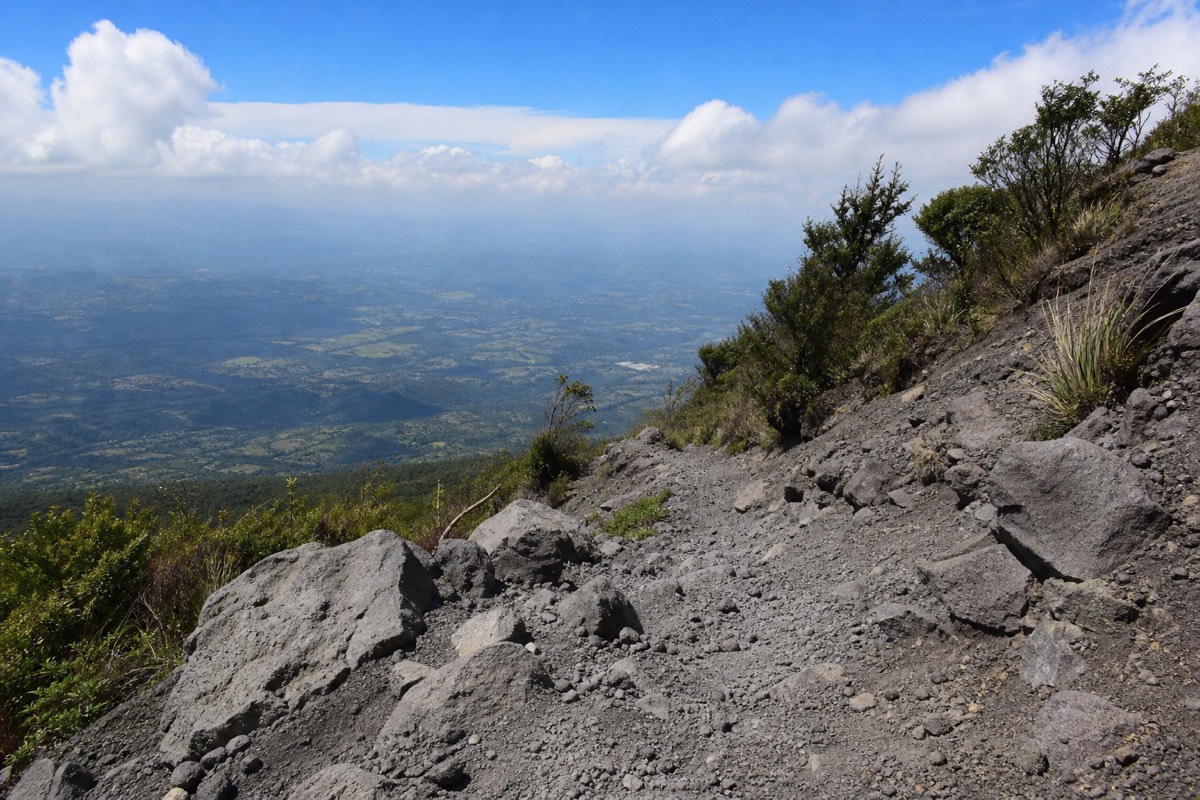
The pacing advice I give everyone: put the climb on day two or three, not day five, and follow it with water rather than another summit. Beach days are perfect recovery. Coatepeque, which the guided day already includes at lunch, is even better, since you are sitting by a caldera lake roughly 10 km across within an hour of the rim. The trail is documented on AllTrails if you want to see the profile before you commit, and my own section-by-section read is in how hard the hike really is.
The exclusions matter on a short trip because there is no second chance. The featured day is not wheelchair accessible and is not recommended for back or heart conditions or pregnancy, and the mandatory group ascent does not wait. Know that before you build the week around it, and if it rules someone out, Cerro Verde's forest trails and the lakeside are the gentle days that still deliver the volcano country.
What itinerary mistakes does Carlos see most often?
From my own notes: putting the volcano on arrival or departure day, trying to reach the trailhead from the beach by public bus, planning a sunset summit when the crater area closes around 13:00, stacking Izalco the day after Santa Ana, and scheduling every hour so that one late bus wrecks the week. Each is fixable in one sentence.
Since 2018 I have listened to a lot of itineraries on the trail, and the ones that go wrong share a shape: they treat the volcano as flexible and the beach as fixed, when it is the other way round. Here is my list, offered as things I have watched happen, not as anyone's rules.
| The mistake | Why it hurts | The fix |
|---|---|---|
| Volcano on arrival or departure day | 7-10 h door to door does not fit beside a flight | Day two or three |
| Public bus from El Tunco or San Salvador | No route reaches the 11:00 last start | Tour pickup, or a car, or overnight in Santa Ana city for the 7:30 bus |
| Sunset or afternoon summit plan | The single daily group leaves late morning; crater closes ~13:00 | Give the volcano the morning |
| Izalco the day after Santa Ana | Steeper, separate hike on tired legs | Put a beach or lake day between |
| Every hour scheduled | One late bus wrecks the week | Leave one unplanned slot |
| Packing for the coast only | The rim at 2,381 m is cooler and windier | One warm layer, always |
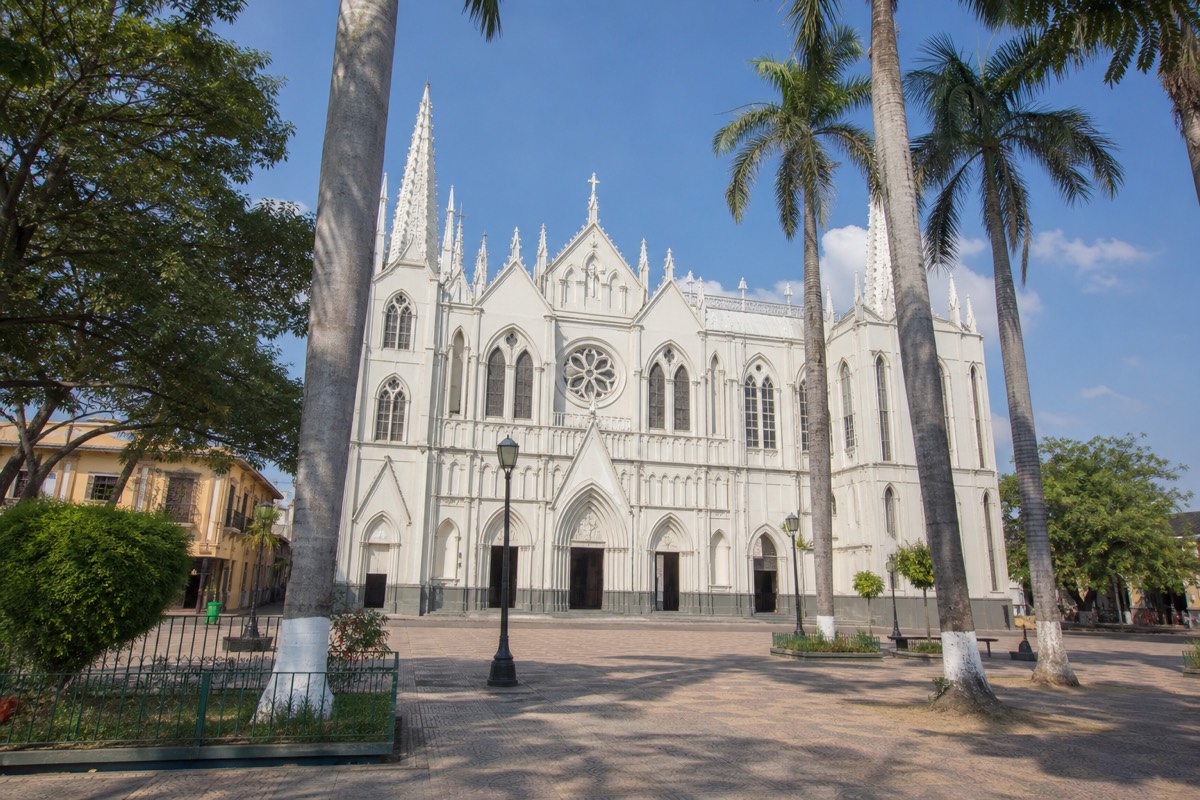
The bus mistake is the costly one, because it fails on the morning itself. Bus 248 from Santa Ana city is the only public option inside the window, and from anywhere else the plan simply does not exist. Travelers find this out at 10:00 in a hostel at El Tunco. On a long loop the answer is a night in Santa Ana city; on a short trip it is a car or the tour, and both are worth the money next to a wasted day.
The unplanned-slot mistake is subtler and I push it hardest. The people who regret their week are never the ones who saw too little. If a rain-shifted plan or a late arrival eats a morning, the spare slot absorbs it. If nothing goes wrong, you spend it by the lake. The guided day even keeps free cancellation to 24 hours before, so shifting the volcano into that slot costs nothing.
Can you fit Izalco or Cerro Verde into the same trip?
Yes, on seven days or more, and not on the same tired legs. Santa Ana, Izalco and Cerro Verde share one national park, with the Cerro Verde facilities at roughly 2,000 m between the three cones. Santa Ana is the mandatory-guide summit with the crater lake; Izalco is a steeper, separate hike; Cerro Verde is the gentle forest option.
The three volcanoes are the reason a longer trip in the west is so easy to fill. From the Santa Ana trail you look across at Izalco's black cone, the "Lighthouse of the Pacific," and behind you the forested bulk of Cerro Verde holds the park gate and the viewpoints. It is tempting to plan all three in a burst. My advice is to space them.
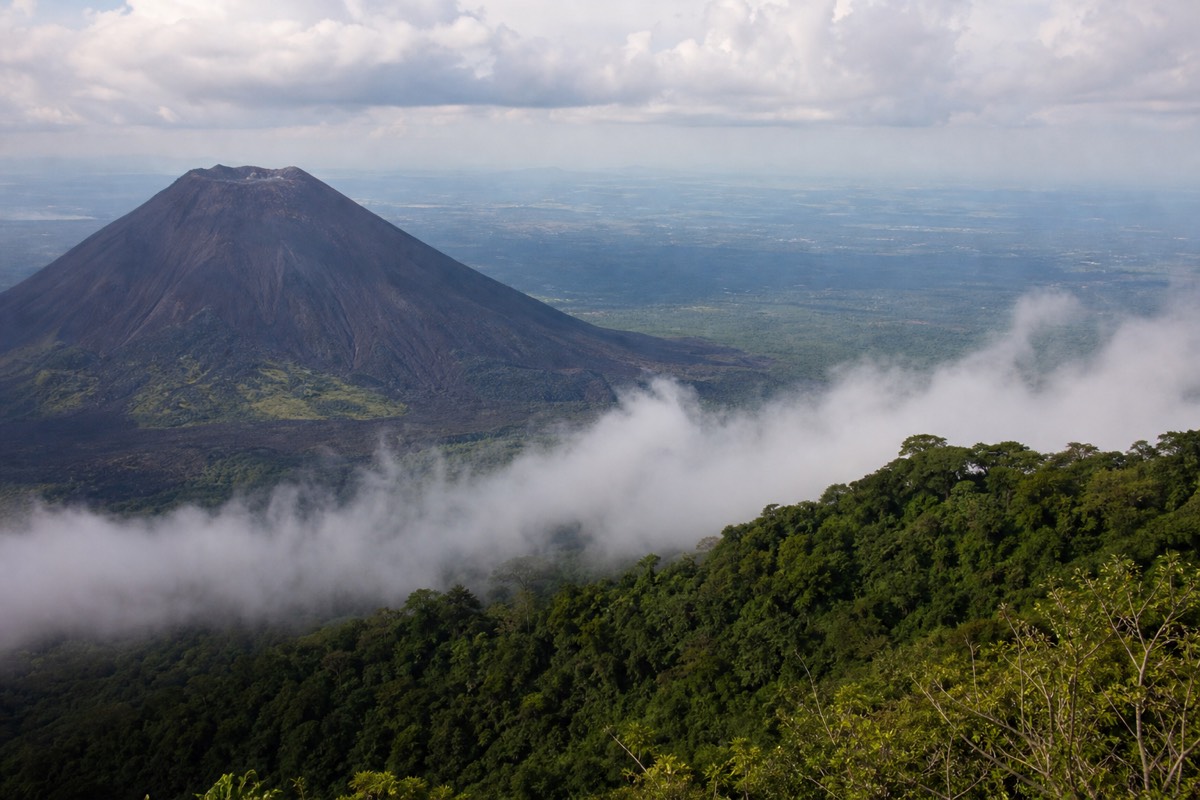
On five days, Santa Ana is the volcano morning and Izalco is the view. The guided day gives you the summit, the crater lake and Coatepeque, and the black cone across the valley is part of the photographs. On seven days, add a night in Santa Ana city and a second morning in the park: either Izalco for the steep, bare climb, or Cerro Verde's forest trails for a gentle day with the best long views of both cones. Do not stack the two summits back to back. The Santa Ana descent over loose rock is where legs get tired, and Izalco the next day is a slog rather than a joy.
If you have ten days or more, the west can hold all three plus the Ruta de las Flores without hurry, and the ambitious version, all three in one long day, is a real thing that I only recommend to strong hikers with a car. I wrote it up in three volcanoes, one day, and the park itself, with its trails and gate, is covered in Cerro Verde National Park. For everyone on a normal short trip, though, the answer is simple: Santa Ana first, on its own morning, and let the other two be the scenery until you come back.
Where does the volcano day fit best?
Put the volcano on your second or third day, based in San Salvador, El Tunco or El Zonte, and do it as the bundled guided day: hotel pickup, the escorted climb with admission included, then lunch at Lake Coatepeque, home by evening. It burns one calendar day and delivers the country's two biggest natural sights.
The logistics force this shape more than preference does. A mandatory local guide leads a single daily group ascent, last start 11:00, and there is no public transport from San Salvador or the beach that reaches the trailhead in time. DIY only works if you overnight in Santa Ana city first, which is a fine plan on a 7-day loop and a wasteful one on a 5-day trip. So for most itineraries the clean move is to book the guided day tour and check live availability and prices on Viator, then build the beach and coffee days around it. The operator covers pickups from San Salvador hotels and from El Tunco and El Zonte, runs small groups reported around 10, and the 4.9 rating across 869 reviews reflects how smoothly the day folds into a short trip. Free cancellation to 24 hours keeps a rain-shifted plan cheap to change.
If you would rather burn the extra night and do it independently, the full bus-and-booth playbook is in how to get to the volcano, along with the money math for both routes.
Should you base in one place or move around?
Under five days, pick one base and day-trip: El Tunco for surf-first trips, San Salvador for flight convenience, both within tour-pickup range of the volcano. With six or more days, add a night or two in Santa Ana city or on the Ruta de las Flores and turn the trip into a small loop.
Single-base trips waste zero mornings on packing and checkout, and in a country this size the day-trip radius covers almost everything a first-timer wants. The volcano hike itself is the most demanding physical day for most visitors, 6.9 km round trip with about 470 m of gain and a rocky final stretch, so I like it early in the trip while legs are fresh, with the beach days as recovery after.
| Pace | Bases | Trade-off |
|---|---|---|
| One base, day trips | El Tunco or San Salvador only | Zero repacking, some longer drive days |
| Two bases | Beach + Santa Ana city | Cheaper DIY volcano access, one transfer |
| Loop | Beach, volcano country, capital | Sees the most, spends time on roads |
Whichever pace you pick, leave one unplanned slot. The travelers I meet who regret their itinerary are never the ones who saw too little, they are the ones who scheduled every hour. The official tourism board's Santa Ana Volcano page gives a feel for the western highlights worth that spare slot.
Is a short trip to El Salvador actually safe and practical now?
Yes. The US State Department lists El Salvador at Level 1, exercise normal precautions, its lowest advisory tier, as of mid-2026. Tourism infrastructure is riding a record boom, the US dollar is the currency, and the marquee sights run on organized, predictable systems like the volcano's daily escorted ascent.
The practical picture has changed faster here than anywhere I know. The Level 1 advisory puts the country in the same band as much of Europe, and the visitor numbers show the response. For a short trip, that translates into real conveniences: reliable tour pickups, dollar pricing with no exchange step, and a well-drilled routine on the mountain itself, where the ascent runs as one guided group inside a fixed window. Deeper context lives in is El Salvador safe for tourists.
Give the country five days if you can, four if you must, seven if you like volcanoes and coffee. However many you choose, fix the volcano morning first and let everything else orbit it. That one decision is the difference between a trip that flows and a trip that fights its own map.