Lake Coatepeque: The Afternoon Half of the Day
How Lake Coatepeque fits into the guided volcano day, a caldera lake about 10 km across with a two hour lakeside lunch stop, swimming and jet skis.
 Written with Carlos Hernández, Santa Ana Volcano tour guide & hiking specialist
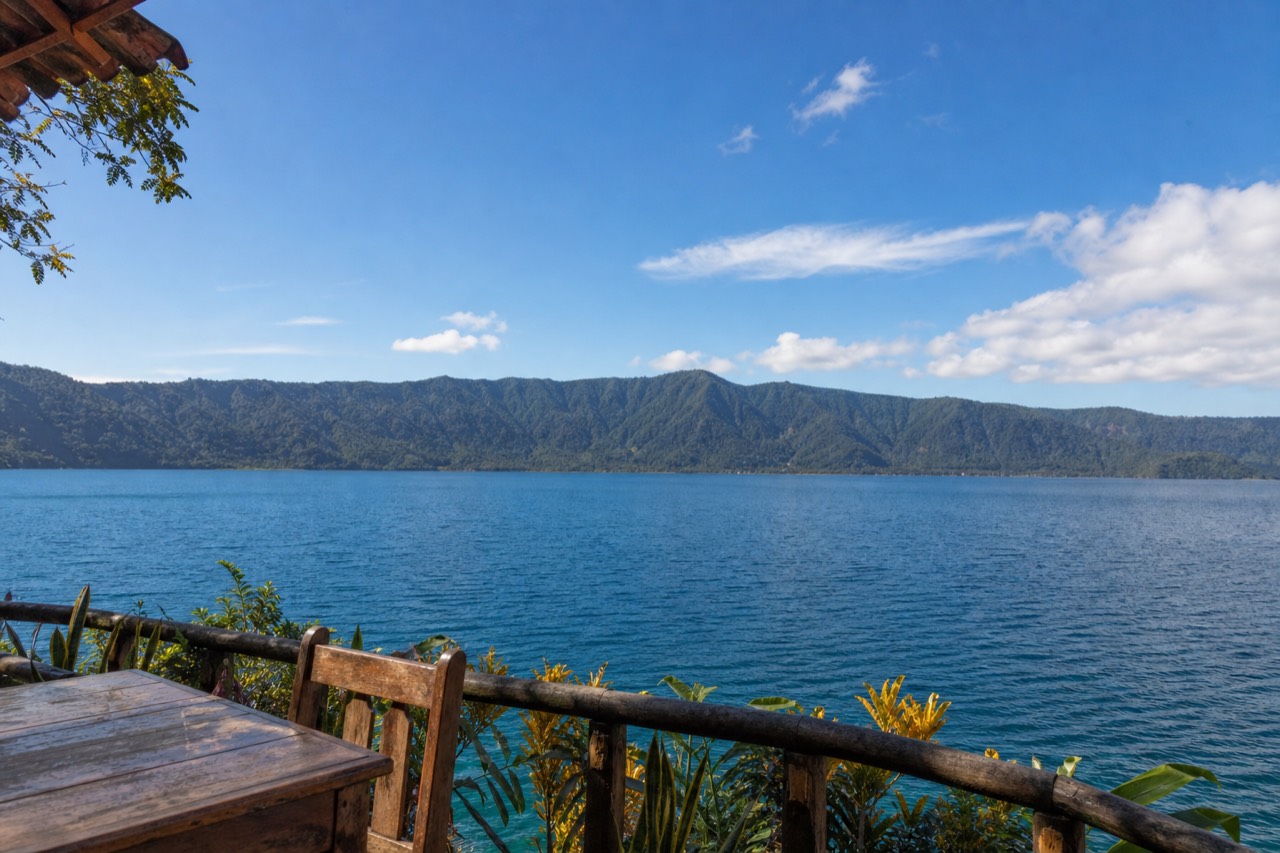
Short answer
Lake Coatepeque is a caldera lake about 10 km across sitting below Santa Ana Volcano. On the featured guided day it fills the afternoon, roughly two hours at the shore with lunch included. Unlike the acidic crater lake at the summit, Coatepeque is the lake you actually swim in, and 2026 reviews mention jet-ski rental.
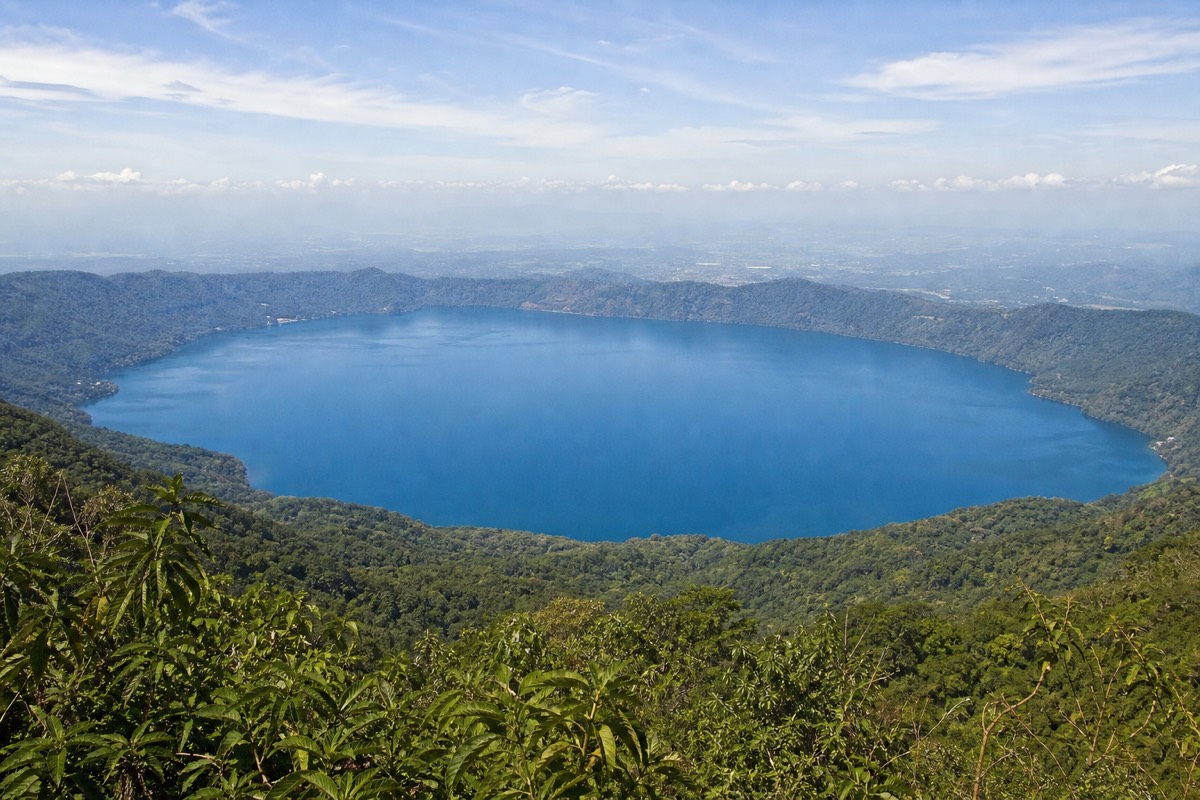
From the trail up Ilamatepec, Coatepeque appears on your right like something spilled from a paint tin: a vast blue circle set into green hills, so wide you can barely frame it in one photo. It is about 10 km across. I have watched hundreds of hikers stop mid-step when the trees open and that view lands. Then, a couple of hours later, they are sitting at its shore with a plate of lunch, which is my favourite trick of the whole day.
This guide explains what the lake is, what actually happens there on the guided day, and how to think about your time at the water.
What exactly is Lake Coatepeque?
Coatepeque is a caldera lake, a huge water-filled volcanic basin about 10 km across, lying below Santa Ana Volcano near Cerro Verde. It is the region's swimming lake: warm, blue, ringed by restaurants and docks. It is the counterpart to the summit crater lake, which is acidic and strictly off limits.
A caldera is what remains after a volcanic landscape collapses and the hollow fills in, and Coatepeque filled with water. The scale is what gets people. The crater lake at the summit is an intense little pool you stand above; Coatepeque is a horizon. From the rim of Santa Ana at 2,381 m you see the entire circle at once, and it is one of the best photographs in El Salvador. The official tourism board leans on that exact view on its page for the volcano at elsalvador.travel.
The two lakes get confused constantly, and the confusion matters, because one of them would hurt you. The summit lake is sulfuric and acidic, swimming there is impossible and prohibited, and rim access is managed by guides. Coatepeque is the opposite: this is where locals come on weekends to swim, eat and get on the water. I unpack the summit lake fully in the crater lake guide; this page is about the blue one.
One more orientation note. The lake and the volcano are neighbours but separate sites. You do not hike from one to the other. You drive, which is why the shape of your transport decides the shape of your day.
What happens at the lake on the guided day?
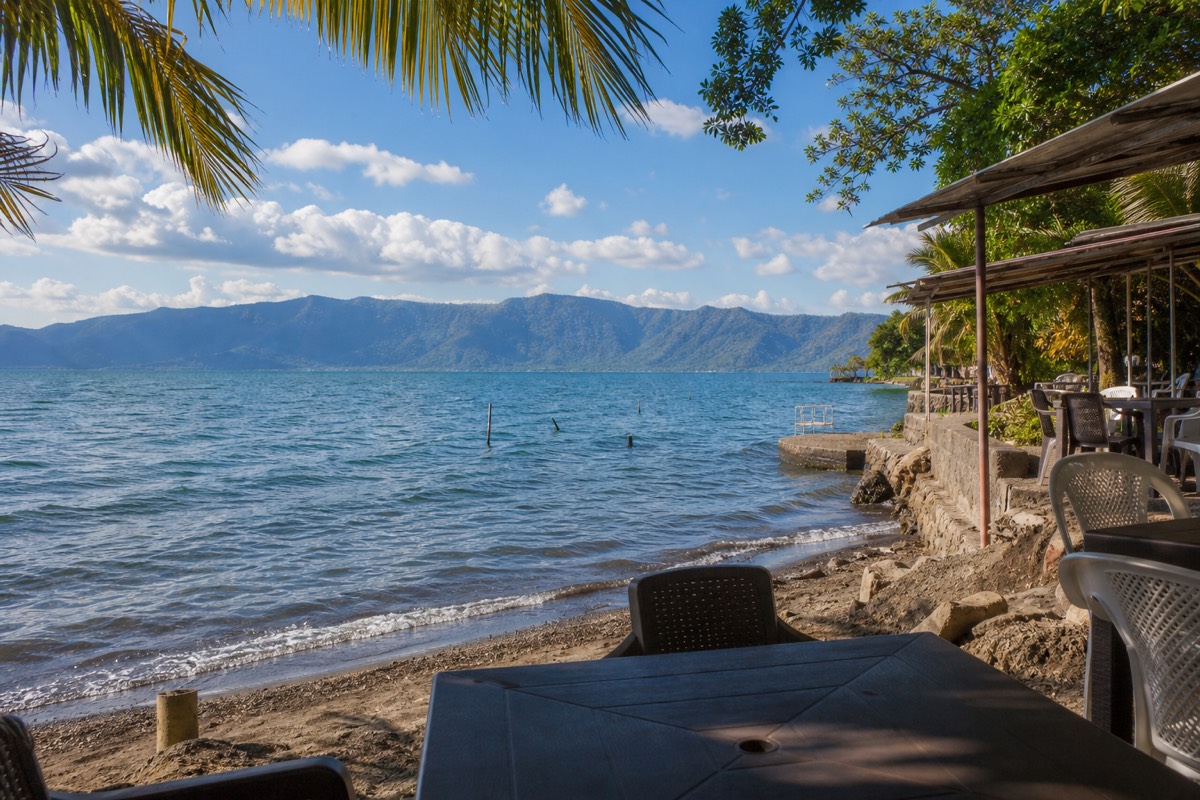
Lunch, mostly, and it is included. After the summit hike, the tour drives down to Coatepeque for about two hours at the shore. You eat a lakeside lunch, swim if you brought a suit, or just sit with the view. Recent reviews describe it as the recovery half of the day.
The featured day runs 7 to 10 hours door to door: hotel pickup in San Salvador (El Tunco and El Zonte are covered too), the guided ascent of Santa Ana with admission included, then the descent and the drive to the lake. The Coatepeque block is about two hours with lunch included, and after roughly 3.5 hours of hiking, sitting at the water with food in front of you feels earned in a way no restaurant meal in the capital can match.
Reviews from 2025 and 2026 are consistent about this rhythm: a moderate but rocky climb, the crater payoff, then the lake as the exhale. Groups stay small, capped at 20 and usually closer to 10 in practice, so lunch is a table, not a cafeteria line. If you want the day in that shape, book the guided day tour and check live availability and prices on Viator. It holds 4.9 stars across 869 reviews with a Badge of Excellence, and cancellation is free up to 24 hours out.
Bring a swimsuit in your daypack and a dry layer for afterwards. The lake sits far below the summit, so you go from cool wind at the rim to warm shore air in under an hour, and swimmers get the best of that.
What can you actually do at Lake Coatepeque?
Swim, eat and get on the water. The shore has lakeside restaurants and docks, the water is warm and open for swimming, and 2026 reviewers mention renting jet skis during the lunch stop. With about two hours on the tour, most people manage lunch plus one activity, not three.
| At the lake | On the tour stop | Worth knowing |
|---|---|---|
| Lakeside lunch | Included in the day | The anchor of the two hours |
| Swimming | Yes, time permitting | Bring a suit and a towel in your daypack |
| Jet-ski rental | Reported in 2026 reviews | Paid on site, ask at the dock |
| Sitting with the view | Always | The lake is about 10 km across, the view works from any chair |
| Photography | Yes | Late-day light on the caldera walls |
Two hours sounds long until you subtract lunch. In practice you eat, and then you have time for one thing done well: a proper swim, a jet-ski run, or a slow coffee facing the water. Travellers who try to stack all three spend the stop checking the clock, and the lake deserves better than that.
A note on safety, since people ask about El Salvador generally rather than the lake specifically: the US State Department currently rates the country Level 1, "exercise normal precautions", its lowest tier, and you can read the advisory itself at travel.state.gov. The lake area on a tour stop feels exactly like what it is, a weekend leisure spot.
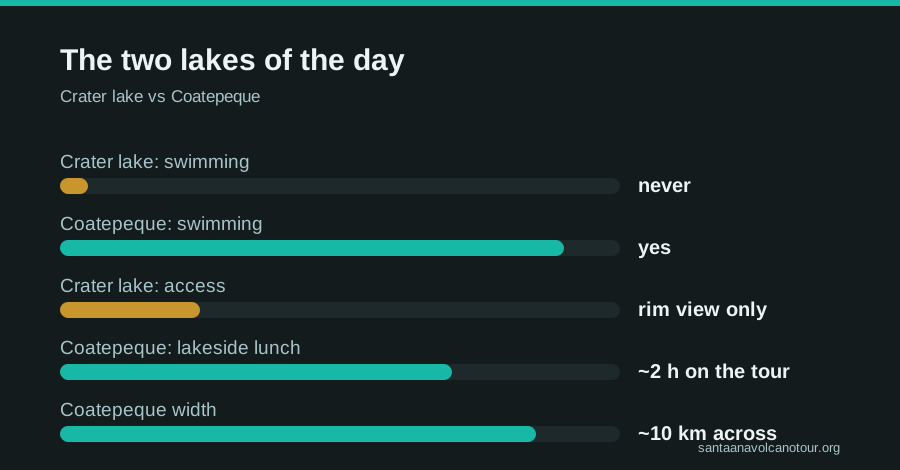
How does the two-hour lake stop actually unfold?
Arrive, eat, then one thing done well. The stop runs about two hours after the descent and the drive down. Lunch is included and anchors the first stretch, then you have time for a swim, a jet-ski run or a slow coffee with the caldera in front of you. Then the drive back to San Salvador or the coast.
Two hours is a specific amount of time, and it helps to picture how it spends itself before you arrive. What follows is a planning sketch, not an operator timetable: the shape of the stop as travellers describe it in 2025 and 2026 reviews, with the minutes rounded so you can budget your own priorities against them.
| Stretch of the stop (allow) | What is happening | What I would do with it |
|---|---|---|
| First few minutes | Out of the vehicle, into the shade, water refilled | Change into your suit now if you plan to swim |
| Lunch block | The included lakeside meal arrives, group at a table | Eat properly; you have just done 3.5 hours on a volcano |
| Middle stretch | Free time at the shore | Pick one: swim, jet ski, or sit with the view |
| Final stretch | Dry off, coffee, last photos | Get into a dry layer before the drive |
| Departure | Back in the vehicle for the run home | Sleep is allowed and common |
The middle stretch is where the choices live. A swim is the cheapest and simplest, and after a warm rocky descent it is the one I would take nine times out of ten. Jet-ski rental shows up in 2026 reviews as a paid extra arranged at the dock, and it is a genuine thrill on a lake this size, but it eats the middle of the stop whole. A coffee facing the water costs nothing but the sitting.
What does not fit is all three. I have watched people try, and the result is a wet, rushed traveller who spent the best hour of the day looking at a phone clock. Choose before you sit down to eat, and the stop becomes the exhale it is meant to be. For the texture of the morning half that earns it, read the complete hike guide.
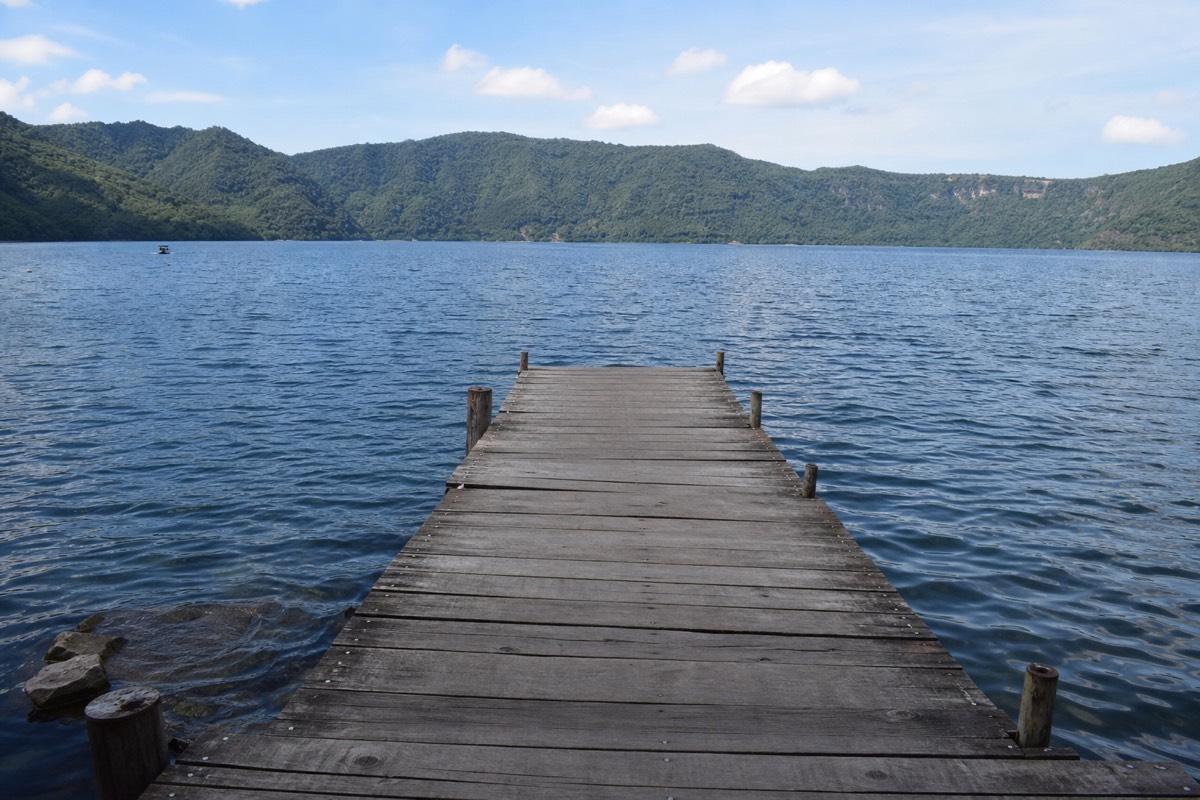
What should be in your daypack for the lake half of the day?
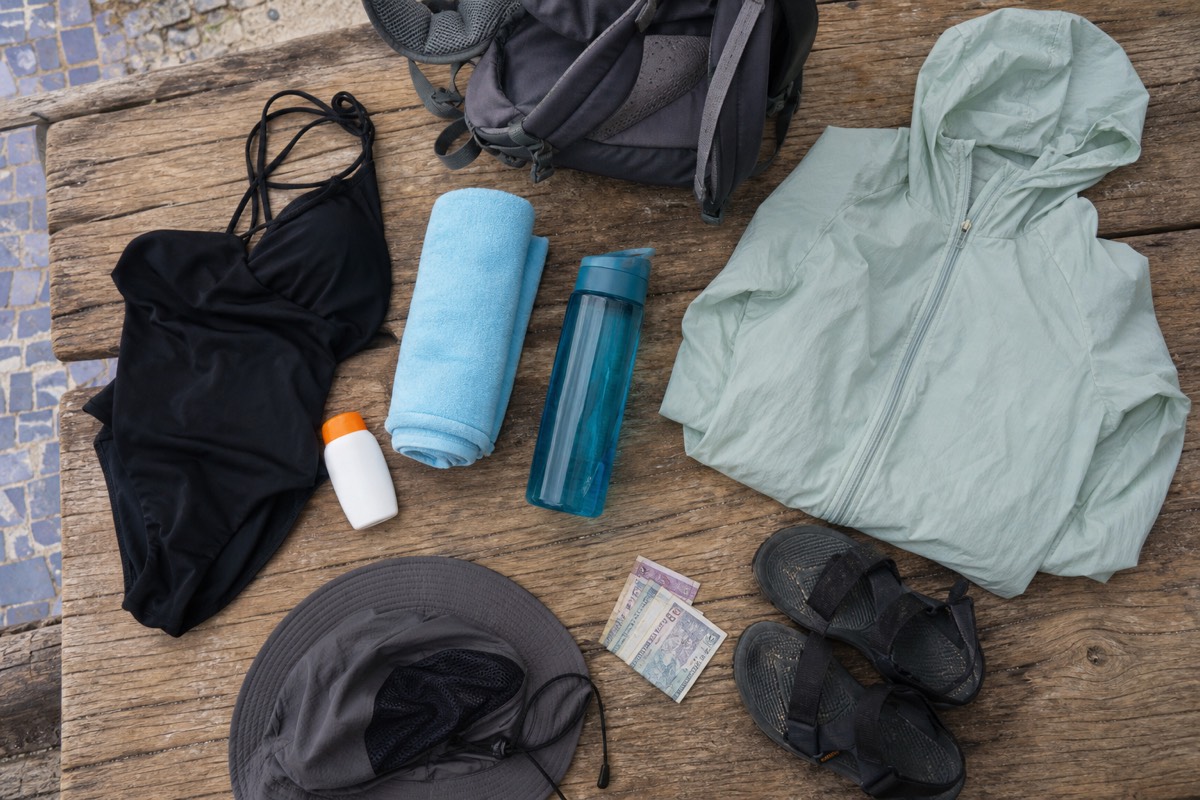
A swimsuit, a small towel, a dry layer, sunscreen and some cash, on top of the volcano kit. You go from cool wind at 2,381 m to warm shore air in under an hour, so the bag has to cover both climates. Lunch is included; extras at the dock are paid on site.
The daypack for this day is really two bags in one. The morning wants water, a wind layer, ankle-support shoes and cash for the park. The afternoon wants the things that let you get into the water and out of it comfortably. Most people pack the morning perfectly and forget the afternoon exists.
| Item | Morning on the volcano | Afternoon at Coatepeque |
|---|---|---|
| Water, 2 litres | Non-negotiable per MARN guidance | Refill at the shore |
| Wind layer | Worn at the rim | Packed away, useful again on the drive |
| Swimsuit | Dead weight | The whole point; wear it under your hiking clothes to save time |
| Small towel | Dead weight | Dries you before the vehicle |
| Dry shirt or layer | Spare | Change into it after the swim |
| Sunscreen | Summit sun is strong | Lakeside sun is stronger than it looks off the water |
| Small US bills | Fees, poles, paletas | Jet ski or a drink at the dock, paid on site |
| Sturdy shoes | Loose rock on the upper trail | Swap for sandals if you carry them |
The swimsuit-under-clothes trick is the one I hand out most, because changing rooms are not something to plan around and the first ten minutes at the shore are the warmest of the stop. A small quick-dry towel weighs almost nothing on the climb and matters a great deal on the drive back, when a damp shirt in air conditioning turns a good day into a shivering one.
Cash is worth repeating even here. The lunch is included in the guided day, so the meal itself costs you nothing extra, but anything you add at the dock is paid in person. The same small bills that bought your poles and paleta on the mountain cover the afternoon. My complete list for the whole day, item by item, is in what to bring on the hike.
What do I tell travellers before the lake stop, and what do they get wrong?
Three things, every time: wear the suit under your clothes, choose one activity before lunch, and keep a dry layer for the drive. The lake is the easy half of the day, and that is exactly why people underprepare for it. The volcano gets all the anxiety, the shore gets all the sunburn.
I do not lead the featured departure, so what follows is what I tell my own hikers about the shape of an afternoon at Coatepeque, drawn from years of finishing volcano days beside that water. It is planning advice, not a timetable.
The first mistake is arriving at the shore still dressed for the rim. People step out into warm air in a windbreaker and boots, sit down to lunch, and only afterwards think about swimming, by which time the middle of the stop is gone. Wear the suit from the morning. Have the towel on top of the pack.
The second is trying to do everything. Lunch, swim, jet ski, coffee, photos: the list is longer than two hours. Decide on the drive down. A swim after 3.5 hours of hiking is the highest-value hour of the day for most people, and it costs nothing. The jet ski is a fine choice for a different sort of traveller, but it is a choice, not an add-on.
The third is sun. You have just spent the morning at 2,381 m with a hat on, and the shore feels gentler than it is. Water bounces light. Reapply, sit in the shade for lunch, and swim with a shirt on if you burn easily.
A fourth, smaller one: the drive back. Whether you are heading to San Salvador, roughly 1 to 1.25 hours from the volcano, or out to El Tunco at about 2 hours, you will be in a vehicle for a while, and a damp shirt in air conditioning is a miserable way to spend it. The dry layer earns its place. Nothing here is complicated. It is just that by 2 pm, after the summit, nobody is thinking clearly, and I would rather you did your thinking now.
Which season is best for the lake stop?
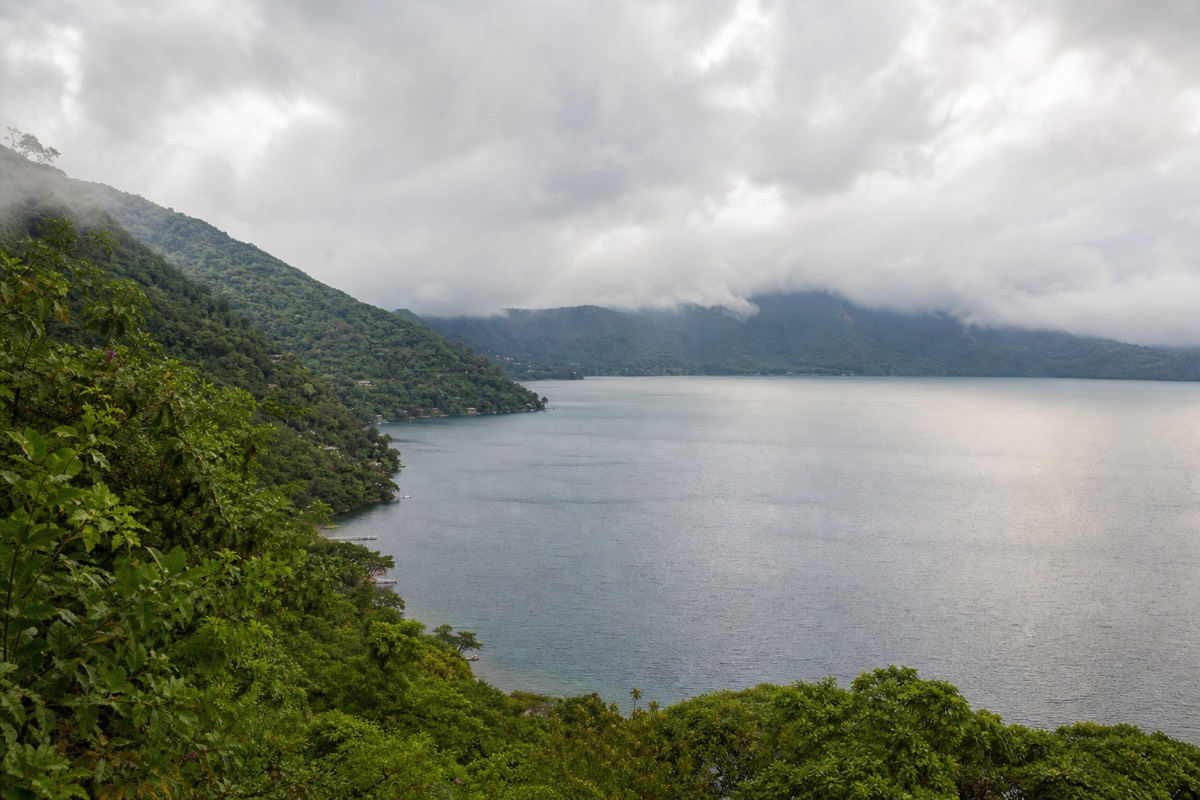
Any of them, with different moods. The dry season, November to April, gives clear skies over the caldera and the crispest views back up to the volcano. The green season, May to October, brings lush slopes and afternoon cloud, which reaches the lake around the time you arrive. The water is warm and swimmable in both.
The volcano and the lake share weather, but they experience it differently. On the summit, the late-morning ascent window puts you on the rim before most afternoon cloud finishes building. By the time you reach Coatepeque, that same cloud, in the green months, may well be overhead. It rarely spoils the stop. It changes the light.
| Season | Months | The summit that morning | The lake that afternoon |
|---|---|---|---|
| Dry season | Nov to Apr | Clearest crater, strongest turquoise | Big skies, sharpest views of the volcano from the water |
| Green season | May to Oct | Usually clear in the ascent window, cloud builds later | Lush green caldera walls, softer light, cloud possible overhead |
| Every season | All year | Summit cooler and windier than the base | Shore warm, water warm, swim either way |
Dry season is the postcard version. Standing in the water at Coatepeque and looking up at the volcano you climbed that morning, sharp against a blue sky, is one of the better moments El Salvador offers. Green season is the atmospheric version, with the caldera walls at their greenest and clouds moving over the water. I have had beautiful afternoons in both. What I have never had is a lake stop ruined by the season, because the swim does not care what the sky is doing.
The one practical difference is the layer question. In green-season cloud the shore is still warm, but the drive back can feel cooler than you expect, and the dry layer in your pack goes from nice to necessary. Otherwise plan the day around the mountain and let the lake take what it gets; the mountain is the half with a weather stake. The month-by-month picture for the whole day is in the best time to hike, and my notes from a wet-month climb are in the rainy season hike report.
Where should you base yourself if the lake matters to you?
San Salvador, El Tunco or El Zonte if you want the guided day with pickup, since all three are covered. Santa Ana city if you want the cheap DIY volcano morning via bus 248, accepting that the lake afterwards is your own transport problem. No public route from the capital or coast hits the climbing window.
Where you sleep decides how the lake fits, more than anything else about the day. The volcano runs on a fixed late-morning window and the lake sits at the bottom of a drive from the park, so the base that gets you to both without stress is the base with pickup.
| Base | How you reach the volcano | How the lake fits |
|---|---|---|
| San Salvador | Guided day with hotel pickup, ~1 to 1.25 h drive to the volcano | Included two-hour lunch stop, then drop-off |
| El Tunco or El Zonte | Guided day with pickup, ~2 h to the volcano | Same lunch stop, longer day each way |
| Santa Ana city | Bus 248 from La Vencedora ~7:30 to 7:40, ~$0.70, ~2 h | Your own transport from the trailhead to the shore |
| Anywhere without a car | No workable public route that hits the window from the capital or coast | The lake becomes a separate day |
The capital is the practical winner for a first visit. The drive to the volcano is the shortest of the pickup options, the featured day collects you at the hotel, and you are back in the city with the whole evening ahead. The coast works too, at the cost of a longer day, and for surfers already based at El Tunco that trade is usually worth it; the specifics are in the volcano from El Tunco.
Santa Ana city is the budget traveller's base and a good one, with the bus 248 putting you inside the ascent window for less than a dollar. The catch is the afternoon. From the trailhead there is no scheduled link to the lakeshore, so the swim either becomes a negotiation or a different day. Some people happily make it a different day, and the town has enough going on to justify a couple of nights; the options are in where to stay in Santa Ana. But if the volcano-then-lake sequence in one day is the thing you want, sleep where the pickup is.
How is Coatepeque different from the crater lake at the summit?
Completely. The summit lake is a small, acidic, sulfuric pool you may only look at from a managed rim. Coatepeque is a caldera lake about 10 km across where swimming is the whole point. One rewards the climb, the other rewards the descent. The guided day is built to hand you both.
| Summit crater lake | Lake Coatepeque | |
|---|---|---|
| Type | Acidic pool in an active crater | Caldera lake |
| Size | Small, contained in the crater | About 10 km across |
| Swimming | Impossible and prohibited | Yes |
| How you experience it | 30 to 45 minutes at the rim, standing | About 2 hours at the shore, seated and fed |
| Getting there | 6.9 km round-trip hike, guide mandatory | Drive to the waterline |
| Mood | Wind, sulfur, silence | Lunch, swimmers, jet skis |
I like sending people to both in one day precisely because the contrast is the story. In the morning you stand above water that would burn you, in the afternoon you float in water the same volcano system made. If you are building a bigger route through the west of the country, the pairing slots neatly into the plans in the volcano itinerary guide.
How should you time your visit to the lake?
Let the volcano set the clock. The mandatory ascent window puts you on the summit late morning and off the mountain by early afternoon, so the lake naturally becomes a 2 pm affair. On the tour that timing is handled for you, hotel to hotel, in a 7 to 10 hour day.
| Option | How the timing works | Best for |
|---|---|---|
| Guided day with lunch stop | Pickup, morning ascent window, lake about 2 h, drop-off; 7 to 10 h total | Most first-timers; zero logistics |
| DIY hike, then the lake | Bus 248 from Santa Ana city around 7:30, hike in the group window, own transport onward to the shore | Confident budget travellers with time |
| Lake only, no hike | Any hour; the shore does not run on the volcano's schedule | Repeat visitors, families skipping the climb |
The DIY route is real but tight. The 248 bus leaves La Vencedora terminal in Santa Ana city around 7:30 to 7:40 for about $0.70 and takes roughly two hours to the trailhead, which lands you inside the ascent window. Getting from the trailhead to the lakeshore afterwards is then your own puzzle to solve, with no scheduled link waiting for you. There is no workable public-transport version of the full day from San Salvador or El Tunco that hits the climbing window; the details live in how to get to the volcano.
My honest take, after years of watching groups finish this day: the lake is not the headline, and that is exactly why it works. The summit gives you the photo you came for. Coatepeque gives you the hour you did not know you needed, warm water and a full plate while the volcano you just climbed stands there on the skyline. Keep the swimsuit at the top of your daypack, and do not skip the swim.