Paletas at the Summit, Pupusas at the Bottom
The ice-pop vendors at the crater rim of Ilamatepec, what food is sold where on the mountain, the cash you need, and where to eat after the climb.
 By Carlos Hernández, Santa Ana Volcano tour guide & hiking specialist
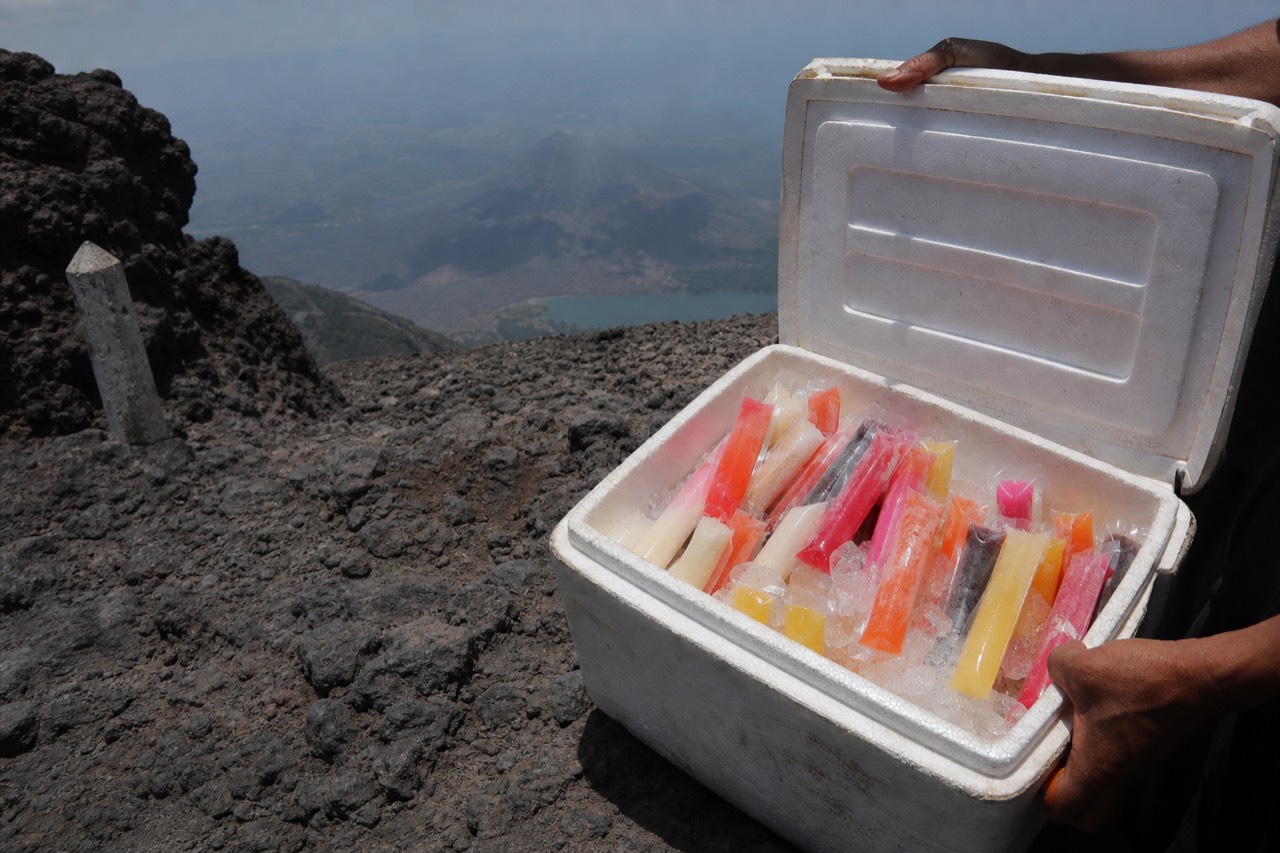
The first time a guest of mine reached the crater rim of Ilamatepec, looked down at that steaming turquoise lake, and then turned to me and asked, "Is that man selling ice cream?", I laughed for a full minute. Yes. He was. At 2,381 meters, above an acid lake, after two hours of climbing, somebody hauls a cooler up the volcano and sells paletas. I have guided this trail since 2018, and by my own count I have watched more than a thousand travelers make that summit. The paleta moment gets the biggest smiles of the whole day, every single time.
Who actually sells ice pops at the top of a volcano?
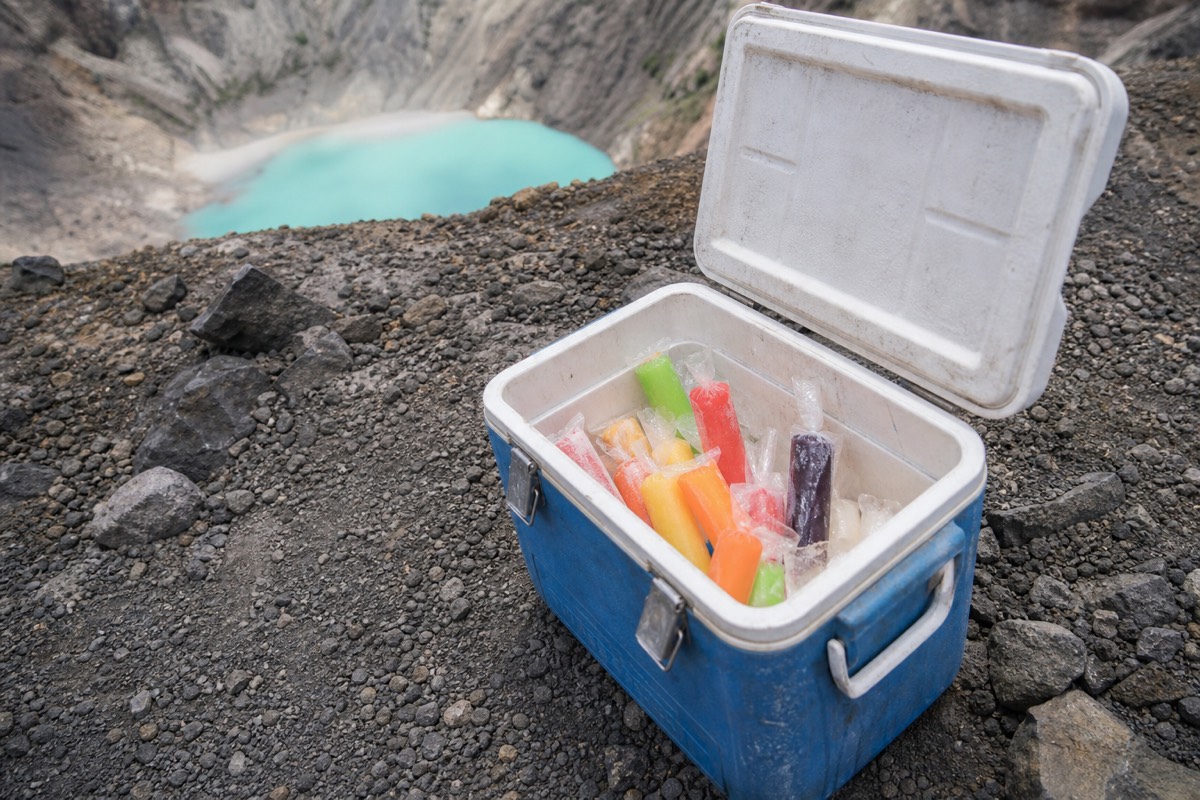
Local vendors from the communities around the trailhead carry coolers of paletas, the Salvadoran ice pops, up the same trail you climb and sell them at the crater rim. Hikers in 2026 reviews mention them constantly. It is cash only, small bills, and after roughly two hours of ascent it is the best money you will spend all day.
These are not park employees and there is no shop up there. The vendors walk up carrying insulated coolers, usually before the main group window opens, and set up near where the trail meets the rim. The flavors change with what fruit is around: coco, mango, tamarindo when you are lucky. Some days there is more than one seller, some days none, so I never promise my groups a paleta. I promise them the crater, which the mountain delivers far more reliably.
What amazes people is the logistics. The trail is 6.9 kilometers round trip with about 470 meters of gain, rocky and loose near the top, and these vendors do it with a loaded cooler. The next time the last stretch feels hard with your daypack, think about that. If you want to know exactly what that climb feels like underfoot, I broke the whole route down in my full hike guide.
What food and drink can you buy on the mountain itself?
Very little, and that is part of the charm. Poles rent for about $2 at the bottom, paletas appear at the summit, and the real meal happens after you descend. There is no cafe, no water station, and no food service anywhere on the trail, so you carry in everything you plan to drink.
Here is the honest map of commerce on Ilamatepec, from bottom to top:
| Spot on the mountain | What is sold | Notes from the trail |
|---|---|---|
| El Tibet trailhead | Walking pole rental, about $2 | Guests praise the poles in reviews; the rocky descent is where they earn their fee |
| Trailhead entrance | Park admission, guide fee | $3 entrance for foreigners, roughly $4 per person for the mandatory group guide |
| The trail itself | Nothing | No stalls, no water, no shade sellers; carry 2 liters of water minimum |
| Crater rim, 2,381 m | Paletas and ice cream from independent vendors | Reported steadily through 2026; cash only, availability never guaranteed |
That middle row matters more than the funny ones. MARN, the ministry that monitors the volcano, publishes guidance that the ascent is not to be improvised and that everyone should carry their own water, and you can check the mountain's current status anytime on the official monitoring site at snet.gob.sv. Two liters per person. In the dry season sun that is not generous, it is the minimum.
How much cash should you carry for the climb?
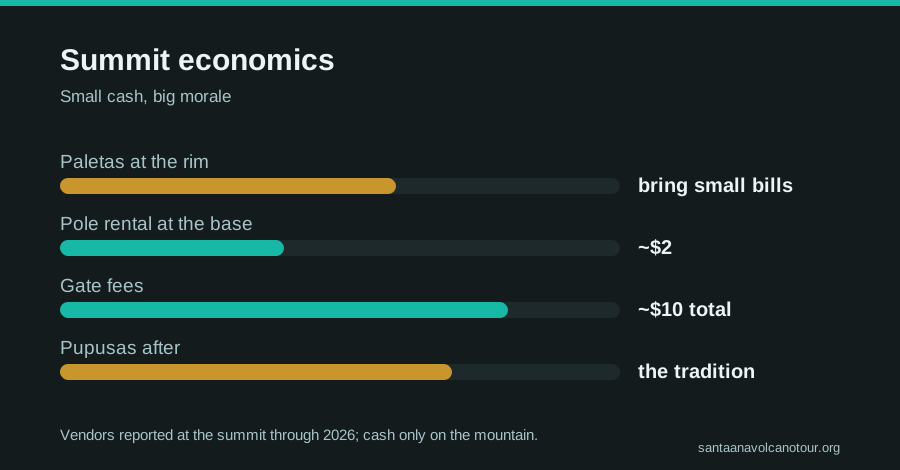
A DIY day runs about $17 all-in according to an independent traveler report from April 2025: $3 entrance, about $4 for the group guide, $3 parking if you drive, $2 for poles, and the rest for the bus and a summit paleta. Carry it in small US bills because nobody on the mountain makes change for a twenty.
Everything on this mountain is cash, US dollars, and mostly coins and singles. The entrance kiosk, the guide fee collection, the pole rental, the paleta man: none of them run cards. My cash plan for guests looks like this:
| Expense | Amount (USD) | Who pays it |
|---|---|---|
| Park entrance | $3 foreigners, $1.50 Salvadorans | Everyone hiking |
| Group guide fee | ~$4 per person | Everyone; a private guide runs $35-40 |
| Parking | $3 | Drivers only |
| Pole rental | ~$2 | Optional, worth it |
| Bus 248 from Santa Ana city | ~$0.70 each way | Bus travelers only |
| Paletas and small extras | A few singles | The happiest line item |
Now, the caveat I always give: that budget covers a solo mission where you have already solved transport to the trailhead by the 11:00 last-start deadline, which is genuinely awkward without a car. If you are based in San Salvador or the beach towns, the math changes. The day tour that I point independent travelers toward rolls admission, transport, a bilingual guide, and lunch into one booking. If that fits your trip better, book the guided day tour and check live availability and prices on Viator, then bring your small bills anyway for the paletas. I compare the two approaches honestly in the cost breakdown guide.
Why does small cash matter so much up here?
Because every transaction on the mountain is tiny and personal. The guide fee, the entrance, the pole rental, and the paleta each cost a few dollars, paid hand to hand, and change for large bills is scarce. Small cash also flows directly to the families who work this mountain rather than through any middleman.
I want to say something about what those little purchases mean. The mandatory local guide system, the pole rentals, the coolers at the rim: this is the local economy of the volcano. The communities near the trailhead built it. When a hiker rents poles for $2 and buys a coco paleta at the top, that money stays within sight of the mountain. Tourism in El Salvador is growing fast right now, a record 4.1 million international visitors came in 2025, and days like this one are why. The country's official tourism page for the volcano at elsalvador.travel leads with the crater, but the small economy around the trail is the part I hope grows with it.
There is a practical side too. Vendors and fee collectors simply cannot break big notes. Arrive with a twenty and you may watch the paleta cooler close before your change gets sorted. Fives, singles, and quarters. That is the kit.
What does the cash math look like for two people doing it independently?
Take a couple hiking from Santa Ana city on bus 248: about $2.80 for two on the bus there and back, $6 in entrance fees, roughly $8 for the group guide, about $4 for two sets of poles, and a handful of singles for paletas. That lands close to the ~$17 per person all-in figure an independent traveler reported in April 2025.
I like doing this sum out loud at the trailhead because it calms people. Nothing here is expensive. The problem is never the total, it is the shape of the total: eight or nine separate little payments to eight or nine different hands, all in US dollars, all wanting exact change.
| Line item, two people | Rough amount | Notes |
|---|---|---|
| Bus 248, Santa Ana city to El Tibet and back | ~$2.80 for two | About $0.70 per person each way |
| Park entrance | $6 | $3 per foreigner; Salvadorans pay $1.50 |
| Group guide fee | ~$8 | Roughly $4 per person, paid at the trailhead |
| Pole rental | ~$4 | About $2 a pair, worth it on the descent |
| Summit paletas | A few singles | Bring more than you think; people buy two |
| Running total | Roughly $17 per person all-in | Matches the April 2025 independent tally |
Drivers swap the bus line for $3 parking, and the private guide option runs $35 to 40 if you want your own person, which almost nobody hiking on a budget needs. Where the numbers stop being fun is transport from anywhere other than Santa Ana city. There is no workable public route from San Salvador or El Tunco that reaches the trailhead before the 11:00 last start, so a couple based on the coast is looking at a rental car or the guided day. I lay the whole country's daily budget out in the El Salvador trip cost guide if you want the bigger picture.
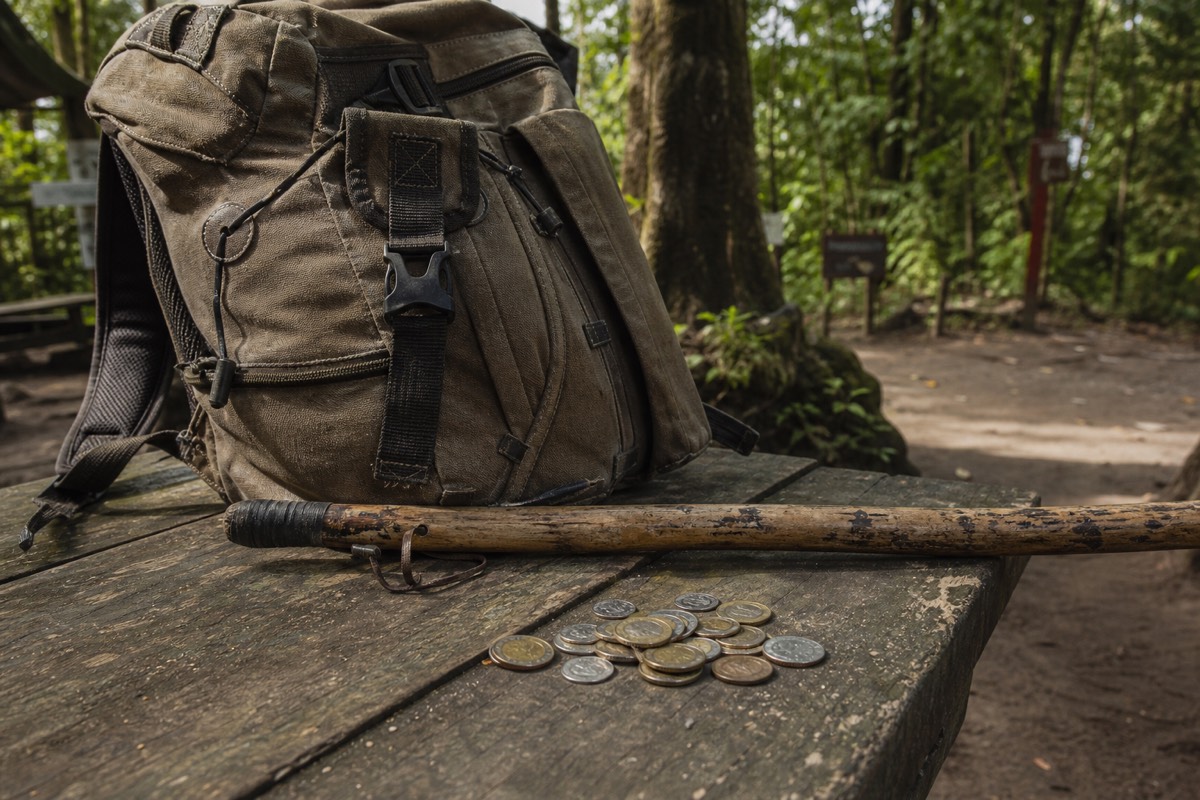
One more habit worth copying from the vendors themselves: they arrive with a float of coins. Do the same. Quarters and singles cover the entrance, the guide, and the pole rental without a single "do you have anything smaller." I have watched a hiker hold up a queue of thirty people at the fee table with a fifty. Do not be that hiker.
What do you eat on the trail itself when nothing is sold?
Whatever you carried. There is no food service between the trailhead and the rim, so I tell hikers to pack two liters of water and something salty and something sweet for the top. Eat properly before you start, snack once at the summit, and save your appetite for the paletas and the meal after the descent.
The trail runs about two hours up and an hour and a half down, which is not long enough to need a picnic and exactly long enough to get grumpy without one. My pattern, refined over a lot of groups: a real breakfast before the trailhead, then nothing until the rim except water. At the top, one small snack while you look at the lake. Then the paleta, if the cooler made it up that day. Then down, and then the pupusas.
Water is the item people underestimate. Two liters per person is the floor MARN gives in its guidance, and in the dry-season sun above the forest I would not go lower. In the green months cloud cover fools people into drinking less. Altitude does not care about cloud. The summit is 2,381 meters, cooler and windier than the base, and the combination of wind, effort, and thin shade dries you out quietly.
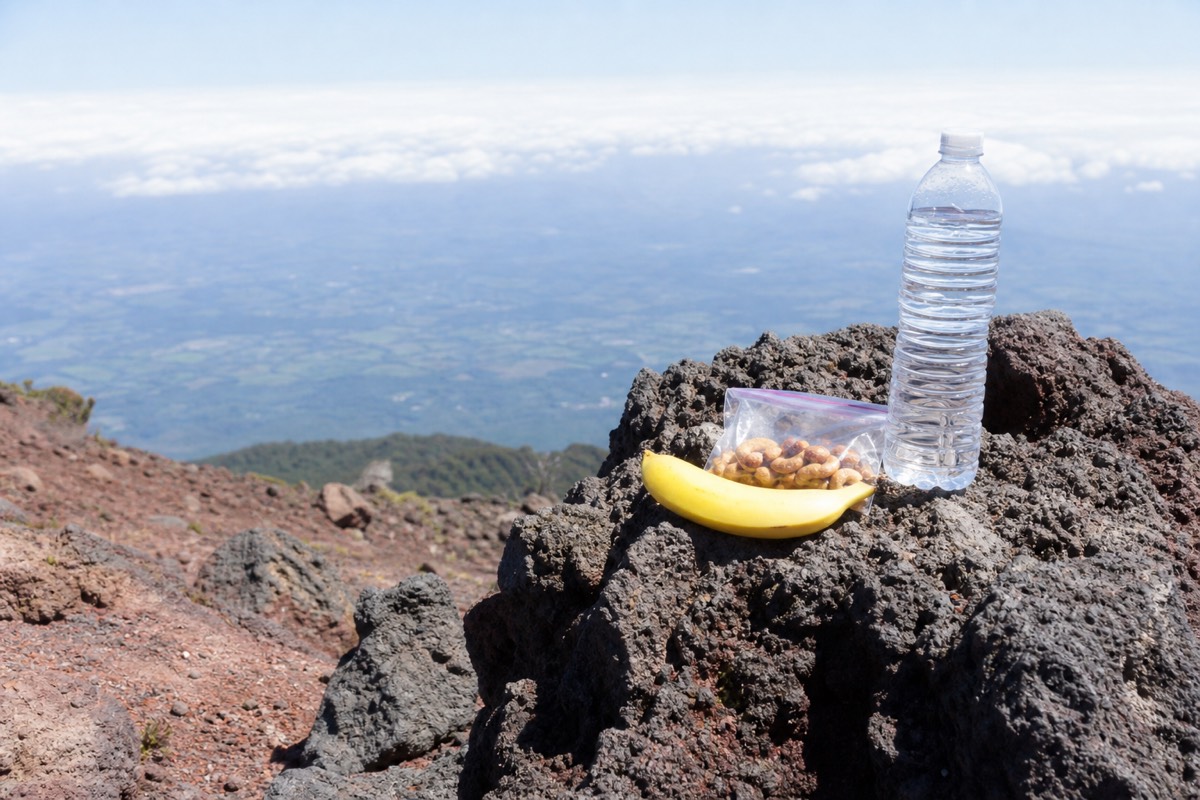
Salty matters because you sweat. Sweet matters because the last rocky stretch near the summit is where energy dips and morale follows. Nuts, a banana, a bag of plantain chips: nothing fancy, nothing that melts. Leave the chocolate at home unless you enjoy drinking it. Whatever you carry up, carry down, because MARN's no-litter line is not decorative and the trail stays clean because people honor it. I keep the full checklist, food and otherwise, in the what to bring guide.
A last thought on timing. Because the crater area closes around 13:00, your summit snack is a late-morning affair whatever time you started inside the window. Plan breakfast accordingly. The hikers who skip it to catch an early bus are the ones asking me for a granola bar halfway up.
What food and cash mistakes do I see at the trailhead every week?
The same five, in the same order: arriving with only large notes, arriving with no water because "it's a short hike," expecting a cafe or shop at the top, skipping the $2 poles to save money and then paying with their knees on the descent, and buying a paleta at the rim and rushing off before enjoying it. Every one is fixable the night before.
I have guided this trail since 2018 and by my own count more than a thousand travelers have walked it with me, and the mistakes have not changed. What has changed is that I now warn people at the bottom instead of sympathizing at the top.
| Mistake I see weekly | What happens on the mountain | The night-before fix |
|---|---|---|
| Only twenties in the wallet | Fee table stalls, paleta cooler closes before change appears | Break notes at a shop in town, carry singles and coins |
| "It's short, I'll skip water" | Headache and slow legs on the rocky upper trail | Two liters per person, no exceptions |
| Expecting a shop at the top | Hunger and disappointment at 2,381 m | Pack a salty and a sweet snack |
| Refusing the $2 poles | Wobbly descent on loose rock, sore knees for two days | Rent them; ankle support plus poles is the reviewer consensus |
| Bolting after the paleta | Missing the one calm moment of the day | Sit down, face the lake, finish it slowly |
The mistake that costs the most is not on the table because it is not about food: arriving after 11:00. The last start is fixed, the group forms without you, and no amount of small bills reopens the mountain. If you are coming from San Salvador or the beach, the guided day handles that timing for you, and you can still bring your singles for the cooler at the top. I collected the broader beginner errors, food and otherwise, in first-time mistakes on Ilamatepec.
None of these are moral failures. They are what happens when a volcano gets described as "a moderate hike" and people picture a park with a kiosk. Picture a mountain with a man and a cooler instead, and you will pack correctly.
Where should you eat after you come down?
If you are on the guided day, lunch at Lake Coatepeque is already included and it is the right ending: a lakeside meal over blue water about two hours after you leave the rim. Independent hikers should head for a pupusería, because a plate of hot pupusas after a volcano is one of El Salvador's perfect food moments.
Descending takes about an hour and a half, and by the bottom everyone is talking about food. These are the moves I recommend:
| After-hike option | What you get | Best for |
|---|---|---|
| Lake Coatepeque lunch | Included lakeside meal on the guided day, roughly 2 hours at the lake, jet-ski rental reported as an option | Tour guests |
| Pupusería in Santa Ana city | Pupusas hot off the comal, curtido, the full local ritual | Bus and DIY hikers heading back to town |
| Cerro Verde park area | Simple snacks near the parking area at ~2,000 m | Drivers wanting a quick bite before the road |
Pupusas deserve their own paragraph. The thick corn tortillas stuffed with cheese, beans, or chicharrón are the national dish, griddled to order and eaten with fermented cabbage slaw and thin tomato salsa. After 6.9 kilometers of volcano they taste like a reward designed by science. Santa Ana city is full of pupuserías, and if you are staying over, my where to stay guide covers the neighborhoods worth basing in.
One last thing from a guide who has eaten a lot of summit paletas: buy one even if you are not hungry. You are standing on the rim of an active volcano, above a lake the color of a swimming pool you can never swim in, eating fruit ice a man carried up 470 vertical meters for you. There are more expensive experiences in Central America. I am not sure there are many better ones.