Sunrise on Ilamatepec: What a Dawn Ascent Is Actually Like
What an organized dawn ascent of Santa Ana Volcano involves, MARN's rules, how first light changes the crater lake, and how it differs from the 9:30 climb.
 By Carlos Hernández, Santa Ana Volcano tour guide & hiking specialist
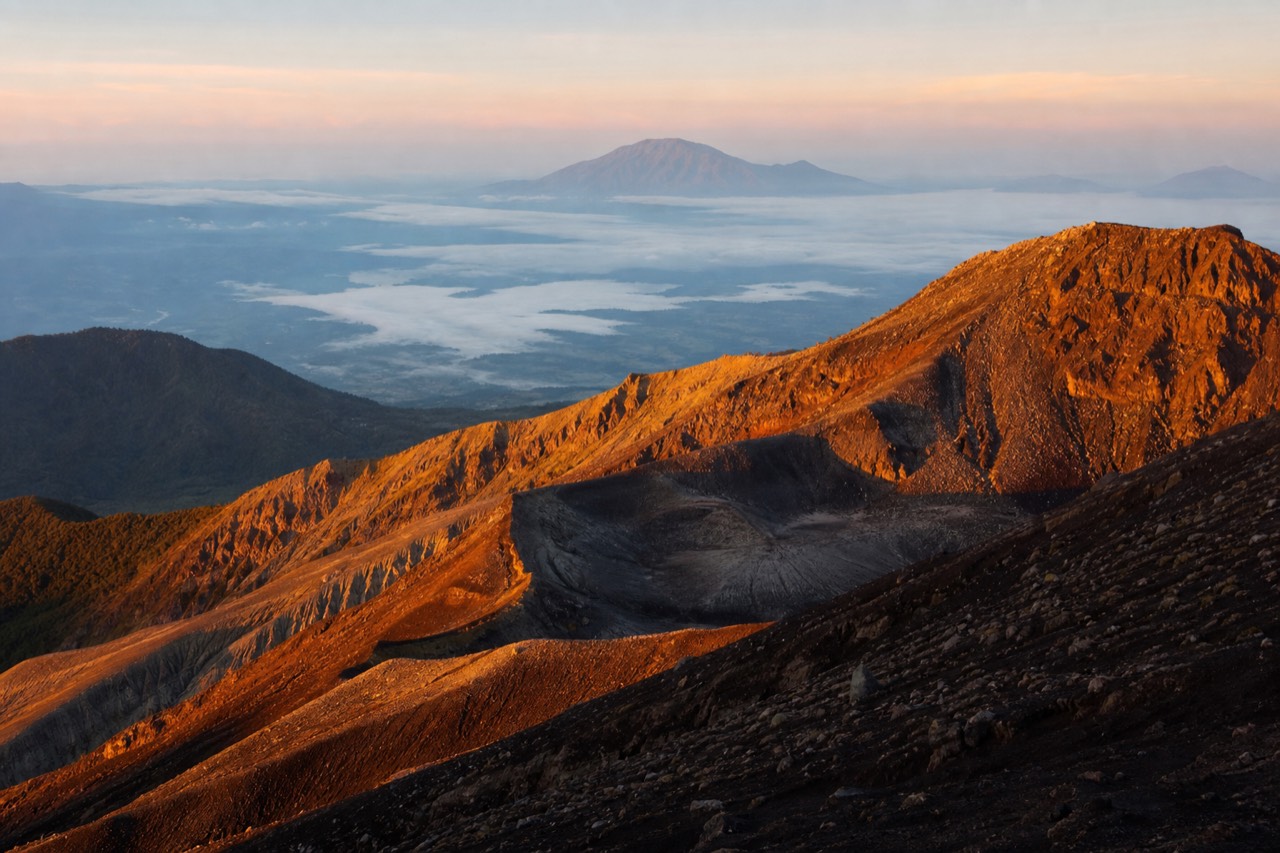
The summit of Ilamatepec before dawn is a different mountain. No paleta sellers yet, no chatter, just wind moving over bare rock and a crater you can hear before you can see it, that faint mineral smell drifting up from a lake still hidden in the dark. I have guided this trail since 2018, and by my own count over a thousand travellers have walked up with me, almost all of them in daylight. The handful of dawn climbs I have done are the ones I still talk about at dinner.
They are also the most misunderstood option on this volcano, so let me lay out what a sunrise ascent really is, who runs it, and whether you should chase one or stick with the standard morning climb.
Can you actually climb Santa Ana for sunrise?
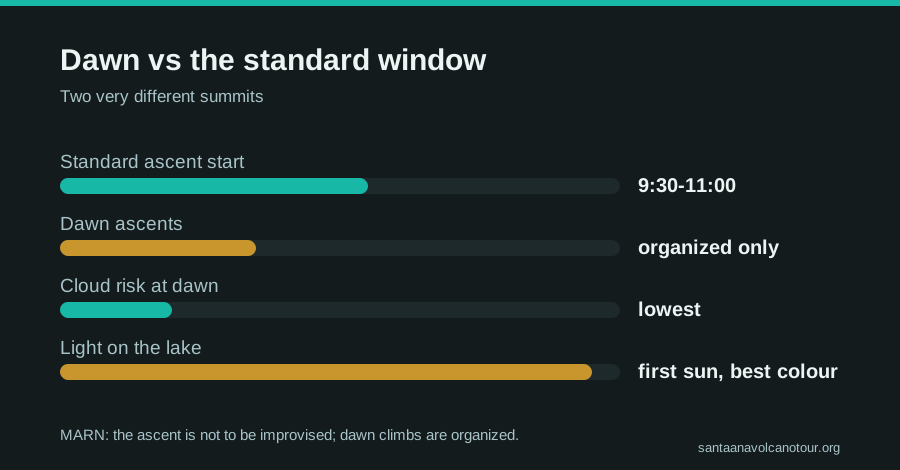
Yes, but only on organized dawn ascents. MARN, El Salvador's environment ministry, is explicit that this climb is not to be improvised, and a local guide is mandatory for everyone on the trail. Special sunrise climbs run with permission and reach the crater at first light; you cannot simply show up at 4 a.m. and start walking.
That word, improvised, matters. Ilamatepec is an active, monitored stratovolcano. Its last eruption was October 2005, and MARN's monitoring network watches it continuously; there are no current advisories or closures, which is exactly why climbing is allowed at all. The ministry's public guidance pairs the no-improvising rule with the basics: carry water, leave no litter, go with the local guides.
Dawn windows are the exception to the normal schedule, announced as special events rather than a daily service. When one runs, the group starts in the dark with guides and reaches the crater rim as the sun comes up. On a normal day the gate simply is not open at that hour; trailhead access starts around 7:00 and the daily group does not move until mid-morning. If someone in a hostel tells you they will sneak you up at night for a fee, walk away. I have watched people get turned around at the gate, and the rule protects the mountain as much as it protects you.
What does first light do to the crater lake?
In flat pre-dawn light the lake reads pale, almost grey, then shifts to a milky green and finally that saturated turquoise as the sun clears the eastern rim. The colour comes from a sulfuric, acidic, mineral-heavy lake that reflects light rather than letting it through, so every change of angle rewrites the surface.
This is the part no photograph prepares you for. The lake is opaque. It does not behave like clear water, where colour deepens with depth. It behaves more like paint, and paint responds to light instantly. I have stood on the rim while a single band of sun crossed the crater floor and drawn a line of bright turquoise through grey water in under a minute. Steam from the fumaroles catches that first light too, and for a short stretch the whole crater looks lit from inside.
By 9:30, when the standard groups start walking, the sun is high enough that the lake sits in full colour all day, weather permitting. What sunrise gives you is the transition, and the light on everything else: Izalco's black cone glowing to the south, the Pacific as a silver sheet, Coatepeque's caldera holding the last shadow. I break down the chemistry properly in why the crater lake changes colour.
How is a dawn ascent different from the standard morning climb?
A dawn ascent is a special, permission-based event that starts in darkness and puts you on the rim at sunrise. The standard climb is the daily guided group that gathers from about 9:30, starts no later than 11:00, and clears the crater area by around 13:00. Same trail, completely different day.
| Organized dawn ascent | Standard daily ascent | |
|---|---|---|
| Availability | Special announced dates only | Every day |
| Start | In darkness, before first light | Group start ~9:30 to 10:00, last start 11:00 |
| Crater arrival | At sunrise | Late morning |
| Time limit at top | Sunrise window, then descend | Crater area closes ~13:00 |
| Light on the lake | Grey to turquoise transition | Full daytime colour |
| Guide requirement | Mandatory, organized in advance | Mandatory, join at the trailhead (~$4 pp) |
| Booking effort | High, dates are scarce | Low, show up before 11:00 |
The trail itself does not change: 6.9 km round trip, roughly 470 m of gain, about two hours up and an hour and a half down, moderate by AllTrails' rating. What changes is everything around it, and if you cannot land a dawn date, the standard morning still delivers the lake at full colour. Most travellers I meet do the day version through an operator: transport, admission and timing handled, then a cooked lunch by the water afterwards. If that sounds like your speed, book the guided day tour and check live availability and prices on Viator before your dates fill; it runs at 4.9 stars across 869 reviews with a Badge of Excellence, and it is built entirely around the standard window.
What actually changes at sunrise besides the view?
Almost every condition on the mountain shifts at dawn: it is colder and windier than the late morning, the rocky upper trail must be walked by headlamp, and there are no summit vendors yet. You trade comfort and services for light, silence and an empty rim.
| At sunrise | By the standard window |
|---|---|
| Cold wind on an exposed summit | Warmer, though still cooler and windier than the base |
| Upper rocks walked in headlamp beam | Full daylight underfoot |
| No paletas or vendors on top | Ice cream sellers waiting at the summit |
| Near-empty rim | The day's groups arriving together |
| Fumarole steam catching low light | Steam less dramatic against bright sky |
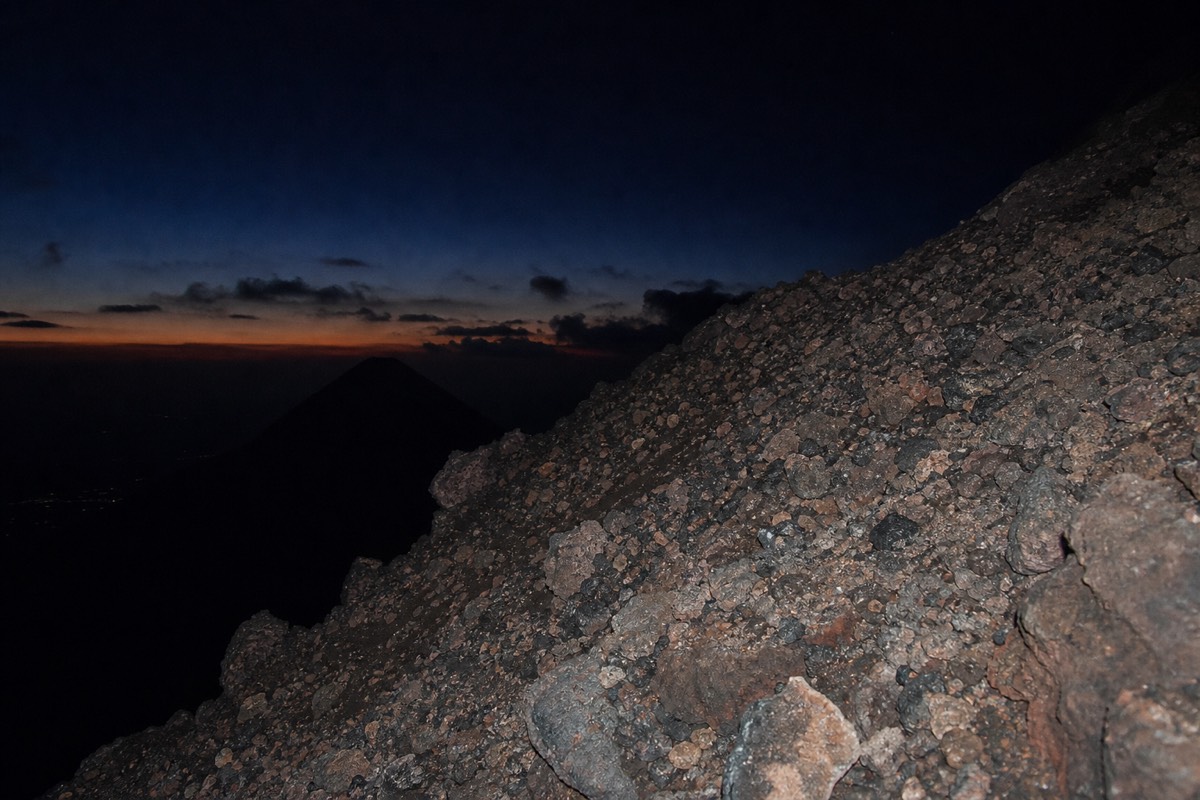
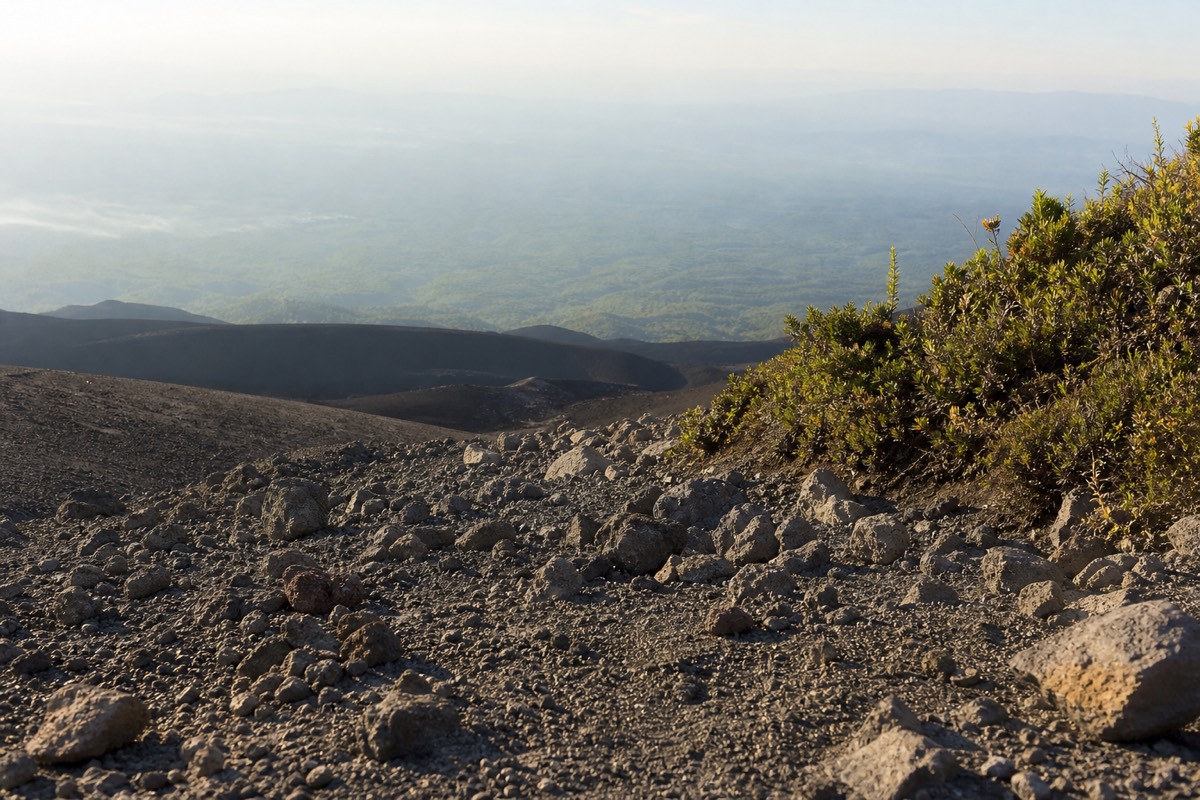
The rocky final stretch deserves respect in the dark. It is loose, sharp volcanic ground that people find tiring even at 10 a.m. with ankle support and rented poles. In a headlamp beam it demands full attention. Guides space the group out and set a slower pace than the daytime climb, which is part of why dawn ascents feel longer even though the distance is identical.
What extra preparation does a sunrise climb need?
Everything the day climb needs, plus a headlamp, a real warm layer, and transport arranged the night before. The 2 litres of water, cash in small US bills, and sturdy footwear are non-negotiable either way; darkness and cold just raise the cost of forgetting them.
| Item | Why it matters at dawn |
|---|---|
| Headlamp, not a phone torch | Both hands free on loose rock |
| Warm windproof layer | The summit is cooler and windier than the base, worse pre-sun |
| 2 L of water | MARN's own baseline; no vendors open that early |
| Cash, small USD bills | $3 entrance for foreigners, ~$4 group guide, $3 parking, $2 pole rental |
| Transport booked the night before | No bus reaches the trailhead before dark; the 248 from Santa Ana leaves ~7:30 |
| Sturdy shoes with ankle support | The upper trail is rough volcanic rock |
The transport line is the one that catches people. The public bus option, the 248 out of La Vencedora terminal in Santa Ana city, leaves around 7:30 in the morning and takes about two hours, which suits the daytime window and nothing earlier. For a dawn date you need a driver or a tour arranged in advance. My full packing logic is in what to bring for the hike.
What does a dawn-ascent day look like from the night before to lunch?
A dawn ascent starts the evening before, with transport booked and cash counted, then runs: a drive to the park in the dark, the group forming at the gate, roughly two hours of climbing by headlamp, sunrise on the rim, an hour and a half back down, and a whole day still ahead of you while most travellers are only just reaching the trailhead.
Here is the shape of it, written as allowances rather than a schedule, because the organizers set the actual clock for each announced date and the sunrise hour drifts through the year.
| Stage | What is happening | Allow |
|---|---|---|
| Night before | Driver or tour confirmed, small USD bills counted, headlamp charged | Do it before dinner |
| Drive in the dark | ~1 to 1.25 h from San Salvador, ~2 h from El Tunco, slow mountain road at the end | Add a buffer |
| Gate and gathering | Fees settled in cash, guides count heads, the group forms | Cold; keep the layer on |
| The climb | 6.9 km round trip, ~470 m of gain, walked slower than the day pace | Roughly 2 h up |
| The rim | Grey lake turning turquoise, Izalco catching first light | The sunrise window, then down |
| The descent | The same loose upper rock, now in daylight | About 1.5 h |
| The rest of the day | Back at the trailhead as the ordinary crowd arrives | Coatepeque, or a long breakfast |
Two things stand out when you lay it out like that. The first is how much of the day is logistics that has nothing to do with walking. Transport is the hard part, because no bus reaches the trailhead before dark and the 248 from Santa Ana city only leaves around 7:30. The second is what you get back at the bottom. When I have come down from a dawn climb, the daily group was just assembling in the parking area, poles being rented, sunscreen going on, and I still had the entire afternoon. Most people spend it at Lake Coatepeque, which is where the guided day tour also finishes, on the standard schedule, with lunch cooked by the water. If you are weighing the two, the morning group ascent describes the everyday version stage by stage.
Who should skip the dawn climb and take the daily ascent instead?
Anyone without pre-arranged transport, anyone climbing in the green season with only one shot at the mountain, first-time hikers who have never walked loose rock in the dark, and anyone the featured day tour would already turn away: back or heart conditions, pregnancy, or a need for step-free access. For all of them the 9:30 climb is the better mountain.
This is my judgment after eight years on the trail and only a handful of dawn climbs, so weigh it accordingly, but the pattern is consistent. The people who love a sunrise ascent are usually experienced walkers who have already done the daytime climb once, know the loose upper third, and can treat the darkness as texture rather than threat. The people who struggle are the ones who arrived in El Salvador for the surf, heard about a sunrise option in a hostel kitchen, and set off with a phone torch and a hoodie.
Green-season travellers deserve a specific warning. From May to October the afternoon cloud is a near-daily event, and while the late-morning start on the standard climb mostly beats it, dawn is its own gamble. Low cloud can sit on the summit at first light and lift by mid-morning, at which point the daily group walks up into a clear crater while you are already back at the car with cold hands and grey photos. If you only have one morning for Ilamatepec in the wet months, spend it on the daily ascent, and read the rainy season hike report first.
Then there is the honest physical line. The featured Viator day lists itself as unsuitable for anyone with back or heart problems, for pregnant travellers, and for wheelchair users, and the trail agrees; the upper section is rubble that rolls, and adding darkness and cold wind to it helps nobody in those groups. Solo travellers ask me about all of this constantly, which is why I wrote what solo travellers ask me: the short version is that the daily group is the friendliest way up this volcano, at any hour.
Which months give a dawn ascent the best odds?
The dry season, November to April, when the crater sits under clear skies for hours and first light has the least cloud to fight through. May to October, the green season, gives you lusher slopes and a real chance of low cloud at dawn, with the standard late-morning climb the safer bet for seeing the lake at all.
Sunrise is a bet on the sky, and the sky here has two moods. I have no month-by-month cloud statistics for the summit and will not invent any; what follows is the pattern I watch from the rim, and it lines up with the way the daily schedule is built.
| Months | Usual sky | Dawn ascent odds | Standard climb odds | What the summit feels like |
|---|---|---|---|---|
| November to April (dry) | Clear, strong sun, sharp horizons | Best of the year | Best of the year, peak turquoise | Cool and windy before sun-up, warming fast |
| May to October (green) | Lush slopes, afternoon cloud most days | A gamble; low cloud can sit on the rim at first light | Good; the late-morning start mostly beats the build-up | Cooler, damper, wind carrying cloud through |
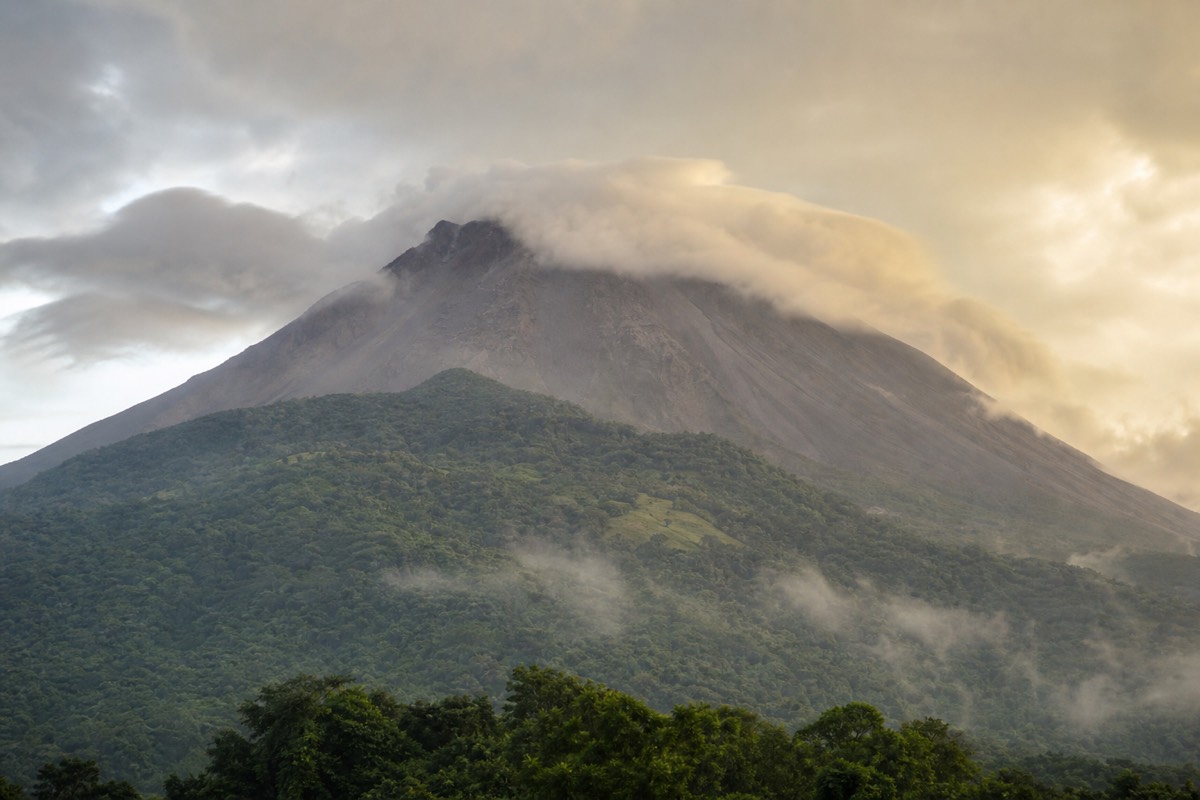
The dry months win on every column, and the difference is bigger at dawn than at 11:00. In late morning the standard climb has the sun on its side. Cloud that formed overnight has usually burned off, and what builds in the afternoon has not arrived yet, which is exactly why the permitted window is where it is. At sunrise there is no such margin. Whatever cloud the night made is still there when you crest the rim, and it either lifts in front of you or it does not.
So if a sunrise date lands between November and April, my advice is simple: go. If it lands in the green season, go with your expectations adjusted, and keep the daily climb in reserve for the following morning if your itinerary allows; how many days in El Salvador shows where that spare morning comes from.
Is a dawn ascent worth chasing, honestly?
If a dawn date lines up with your trip, take it; watching the lake turn from grey to turquoise is the single best light show this mountain offers. But do not build a whole itinerary around one. The standard morning climb reaches the same rim, in full colour, every single day.
Here is my honest guide's arithmetic. Dawn ascents are scarce, announced, and weather-exposed; a cloudy sunrise gives you a cold grey rim and nothing else, and in the green season from May to October the odds of clean dawn light are simply worse. The daily climb, by contrast, is engineered around the weather: the late-morning start mostly beats the afternoon cloud build-up, and in the dry months from November to April the crater is at its clearest anyway. Timing details live in the best time to hike Santa Ana.
So my advice, after eight years on this trail, is layered. Watch for announced dawn windows if sunrise is your thing, and treat one as a gift if it lands. Otherwise take the ordinary miracle: a mid-morning start, two hours of steady climbing, and a turquoise lake that does not care what time you arrived. It has never once disappointed anyone I have walked up there.